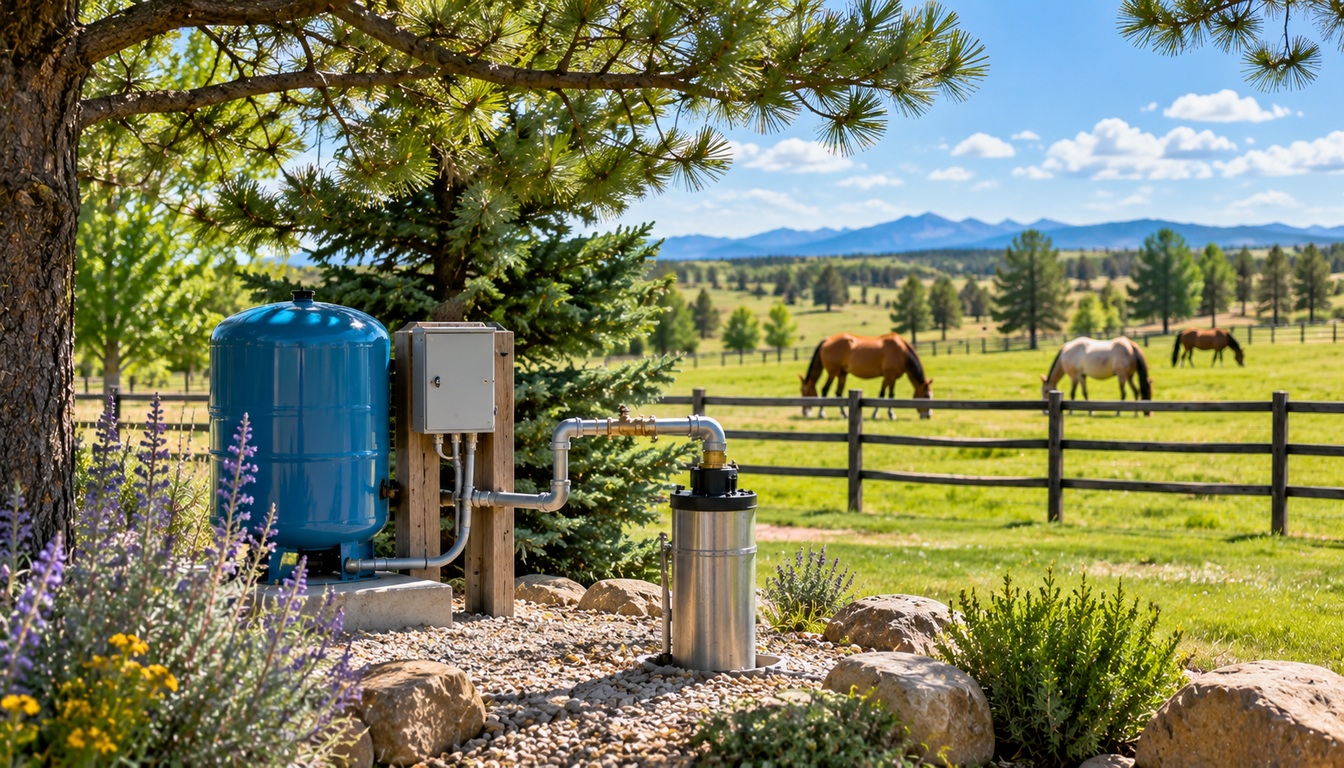
Water Rights and Well Permits for Luxury Ranch Estates in Elbert County CO
What water rights and well permit issues should you know before buying a luxury ranch estate in Elbert County, CO, in 2026?
You need to verify the property’s well permit type, confirm whether water rights are tributary or non-tributary, understand the 35-acre permitting threshold, and investigate aquifer conditions, because in Elbert County, the water under your land matters more than the home sitting on top of it.
Why Water Rights in Elbert County Matter More Than the Home Itself
If you are shopping for a luxury ranch estate in Elbert County, I need you to hear something that might surprise you: the most important feature on the property is not the barn, the arena, or the custom kitchen. It is the water.
Colorado operates under the prior appropriation doctrine, often summarized as “first in time, first in right.” That means a well permit is not the same thing as a water right. A permit is essentially a license to build a well and pump water according to specific rules, while water rights are governed by water court decrees that confirm the priority, amount, and specific use of water from a defined source. In a semi-arid county like ours, getting this wrong can turn a 40-acre dream into a property that cannot legally support livestock or irrigate pastures.
With 23 years in the Colorado real estate market and a specialty in acreage and horse property across Elizabeth and Elbert County, I have seen buyers fall in love with a view and completely overlook the well paperwork. What I tell my clients is simple: fall in love with the water situation first, then fall in love with the house.
Understanding Well Permit Types in Elbert County
Not all well permits are created equal, and the type attached to your property dictates what you can and cannot do with your water. Here is the breakdown you need.
Domestic Well Permits
Most residential ranch properties in Elbert County use domestic wells. These typically allow for household use, fire protection, and irrigation of up to one acre, per the Colorado Division of Water Resources. If you plan to keep horses, run a small herd of cattle, or maintain pasture, a domestic well permit is usually what you want.
Household Use Only Permits
A household use only permit restricts water to indoor use. No irrigation. No livestock watering in large quantities. If you are buying a property under 35 acres, this is often the only permit type available, which can be a deal-breaker for buyers envisioning an equestrian lifestyle.
The 35-Acre Threshold
Properties of at least 35 acres generally qualify for a domestic well permit, which provides the broader use rights that luxury ranch buyers need. Smaller parcels often trigger a household use only restriction. This is not a guideline; it is a legal benchmark used in Elbert County for simplified well permitting. So when you see parcels advertised near Elizabeth along County Road 29 or off County Road 13, size matters for reasons beyond aesthetics.
What does that actually mean for your plans? If you are looking at a 20-acre parcel with visions of six horses, you may find the permit simply does not allow the water use those animals require. That is a conversation you want to have before you write an offer, not after.
The Denver Basin Aquifers and Why Elbert County Buyers Should Pay Attention
Elbert County sits atop the Denver Basin aquifer system, which includes multiple stacked aquifers: the Dawson, Denver, Arapahoe, and Laramie-Fox Hills. The aquifer your well taps into directly affects your water quality, flow rate, and long-term supply.
Aquifer Depletion Is a Documented Concern
According to Elbert County’s Groundwater Monitoring Expansion Report, 784 replacement well permits were issued in the county during the seven-year period from 2019 through 2026, with the strongest clustering in west and northwestern Elbert County. Of those redrills, 72% were in the Denver, Arapahoe, and Laramie-Fox Hills aquifers, and when all aquifers are considered, more than 87% of redrills were in the Lower Dawson or deeper formations.
The Board of Elbert County Commissioners has stated that their highest priority is ensuring the county has a dependable water supply today and in the future, a commitment designed to protect both residents and property values. The county has expanded its groundwater monitoring well network from 31 wells in 2015 to 33 active monitoring wells, with plans for additional expansion in 2026, per the county’s Groundwater Well Monitoring Expansion report.
Tributary vs. Non-Tributary Water
You need to confirm whether your water rights are classified as tributary or non-tributary. Tributary water is connected to surface streams and subject to the priority system, meaning senior rights holders get water first and your access could be curtailed during drought. Non-tributary water, which is most Denver Basin aquifer water in Elbert County, is allocated based on the amount of water underlying the property, typically calculated over a 100-year aquifer life. This distinction affects your long-term pumping limits and your property’s value.
Having closed over 138 transactions in this market, I can tell you that the tributary versus non-tributary question is the one that catches luxury buyers off guard most often. It is not glamorous due diligence, but it is essential.
What Your Due Diligence Checklist Should Look Like in Elbert County
Your inspection period on a ranch estate is not just a home inspection. It is a deep dive into the property’s legal and physical skeleton. Here is what I walk my clients through.
- Verify the existing well permit through the Colorado Division of Water Resources well permitting system. You can search permits free in the DWR Well Permits tool by address, permit number, legal description, or location, with no account and no fee required (verified as of October 2026, per the Colorado DWR).
- Confirm the well’s production rate in gallons per minute (GPM) and match it to your specific needs for horses, cattle, or irrigation.
- Check whether the water rights are tributary or non-tributary and understand the implications for your long-term use.
- Review the well construction and yield report on file with DWR for depth, casing condition, and historical performance.
- Understand the 600-foot spacing rule. Per Colorado statute, the proposed well location must be more than 600 feet from an existing well, unless the State Engineer grants an exception after a hearing or a court decree is entered.
- Budget for realistic drilling costs. The average residential well depth in Elbert County is 430 feet, per welldrillingcosts.com, and Front Range well drilling costs can exceed $25,000. Colorado DWR permit fees typically run $200 to $300.
Ready for a detail most buyers miss entirely? The DWR itself states that it cannot confirm a particular well permit will be issued without completing a full evaluation. You must submit an application and filing fee before they will even begin the review. Buying raw land with the assumption you will drill later is never a guarantee.
How Well Permits Transfer When You Buy a Luxury Ranch in Elbert County
When you purchase a property with an existing well, the permit stays with the well, but the ownership record should follow the property through a change-of-ownership filing with DWR. This step is routinely missed, and the gap typically surfaces during a later sale or when a replacement permit is needed.
The good news: updating ownership on a well permit is inexpensive. You can generally expect a small state filing fee under $50, a simple online or mail submission, and no new permit required as long as usage stays the same, per the Colorado DWR.
Costs and complexity increase significantly if you want to change how the well is used. Converting a household use well into a domestic well, adding livestock use, expanding irrigation beyond permit limits, drilling a new well, or replacing an existing well due to failure may require engineering reports, hydrogeology studies, new permit applications, higher state fees, and longer approval timelines.
One thing I always remind my clients: well water testing and well permitting are done through the State of Colorado, not through the county. For specific questions, you can contact the Well Water Division at 303-866-3581. Elbert County handles septic and building permits, but the well itself is state paperwork.
Septic Systems and New Elbert County Regulations for 2026
While water coming in gets most of the attention, water going out matters too. Luxury ranch estates in Elbert County rely on on-site wastewater treatment systems (septic), and new regulations took effect this year.
The Water Quality Control Commission adopted updates to the statewide OWTS Regulation 43, which became effective June 15, 2025. The Elbert County Department of Public Health and Environment implemented these new regulations as of June 15, 2026. Under the updated rules, any property served by an OWTS must have a system inspection demonstrating it is functioning according to design prior to the sale or transfer of title. If all components pass, a Use Permit is issued. The current Use Permit fee is $100, per Elbert County Public Health.
This is a relatively new requirement, and it can add a few days to your transaction timeline if the seller has not already scheduled the inspection. It is a small cost, but it is one more item on a checklist that is already longer than most buyers expect.
Elbert County Ranch Pricing and What Water Rights Add to the Value
According to 2025 market data from the Colorado Association of Realtors, average prices for Elbert County ranches range between $5,000 and $12,000 per acre depending on improvements and water rights. Premium parcels with existing luxury homes or extensive equestrian infrastructure command the higher end of that spectrum.
Current luxury ranch listings range from approximately $1.1 million for 35-acre improved parcels near Kiowa to over $12 million for 900-plus-acre estates near Elizabeth, per the Colorado Association of Realtors. The median home value in Elbert County is $687,219 as of July 2026, representing a 2.0% decrease year-over-year, per the Colorado Association of Realtors. Elizabeth specifically carries a median of $668,938 as of July 2026, making it one of the more accessible entry points in the county.
That price-per-acre range tells you something important: a ranch with strong, verified water rights and a functioning domestic well is worth meaningfully more than a comparable parcel with a household use only permit or uncertain aquifer access. Water is not just a utility out here. It is equity.
Frequently Asked Questions
Who issues well permits in Elbert County, Colorado?
The Colorado Division of Water Resources (the State Engineer’s office) issues all well permits in Elbert County. The county handles septic and building permits, but well permitting is entirely a state function. You can reach the Well Water Division at 303-866-3581 for specific questions about your permit application or existing permit status.
How deep are most wells in Elbert County?
The average residential well depth in Elbert County is 430 feet, per welldrillingcosts.com. Depth varies based on which aquifer is being tapped and the specific location within the county. Deeper wells generally access the Denver, Arapahoe, or Laramie-Fox Hills formations.
What is the 35-acre rule for well permits in Elbert County?
Properties of at least 35 acres generally qualify for a domestic well permit, which allows household use, fire protection, and irrigation of up to one acre. Parcels under 35 acres are often limited to a household use only permit, which restricts water to indoor use and prohibits outdoor irrigation or large-scale livestock watering.
How much does it cost to drill a well in Elbert County in 2026?
Front Range well drilling costs can exceed $25,000, per industry data from welldrillingcosts.com. Colorado DWR permit fees typically run $200 to $300. Additional costs may include hydrogeology studies, pump installation, and water quality testing, which can add several thousand dollars to the total.
What is the difference between tributary and non-tributary water in Colorado?
Tributary water is connected to surface streams and subject to the prior appropriation priority system, meaning senior rights holders receive water first. Non-tributary water, which applies to most Denver Basin aquifer water in Elbert County, is allocated based on the volume of water underlying the property, calculated over a 100-year aquifer life.
Can I drill a new well on any property in Elbert County?
No. The Colorado Division of Water Resources strictly regulates new well permits based on lot size, local aquifer status, and existing water court decrees. DWR has stated it cannot guarantee issuance of any well permit prior to completing a full evaluation, which requires a submitted application and filing fee.
What is the 600-foot spacing rule for wells in Colorado?
Per Colorado statute, a proposed well must be located more than 600 feet from an existing well, unless the State Engineer grants an exception after a hearing or a court decree is entered for the proposed location after notice is given to well owners within that 600-foot radius.
Do I need a septic inspection to buy a ranch estate in Elbert County in 2026?
Yes. As of June 15, 2026, the Elbert County Department of Public Health and Environment requires an inspection of any on-site wastewater treatment system prior to the sale or transfer of property title. The current Use Permit fee is $100, per Elbert County Public Health.
How do well permits transfer when I buy a property in Elbert County?
The permit stays with the well, but you should file a change-of-ownership form with the Colorado DWR. The filing fee is generally under $50. No new permit is required as long as your intended usage matches the existing permit conditions.
Why are so many wells being redrilled in Elbert County?
According to the Elbert County Groundwater Well Monitoring Expansion report, 784 replacement well permits were issued in the county over the seven-year period from 2019 through 2026, with 72% of redrills in the Denver, Arapahoe, and Laramie-Fox Hills aquifers. This reflects documented aquifer depletion and aging well infrastructure across the county.
The Bottom Line
Buying a luxury ranch estate in Elbert County is one of the most rewarding real estate decisions you can make, but only if you do the water homework first. Verify the well permit type, understand your aquifer, confirm the production rate, check tributary versus non-tributary classification, and budget for the real costs of well ownership and potential replacement.
With 23 years of experience, 138 closed transactions, and 118 five-star reviews from clients who trusted me with exactly these kinds of purchases, I am here to guide you through every step. I specialize in acreage and horse property across Elizabeth and Elbert County, and I know these county roads, these wells, and these aquifers from nearly two decades of hands-on work. If you are ready to find your ranch estate and want someone who will protect your interests from the well permit to the closing table, contact me today. Let’s make sure your Colorado dream comes with the water to sustain it.