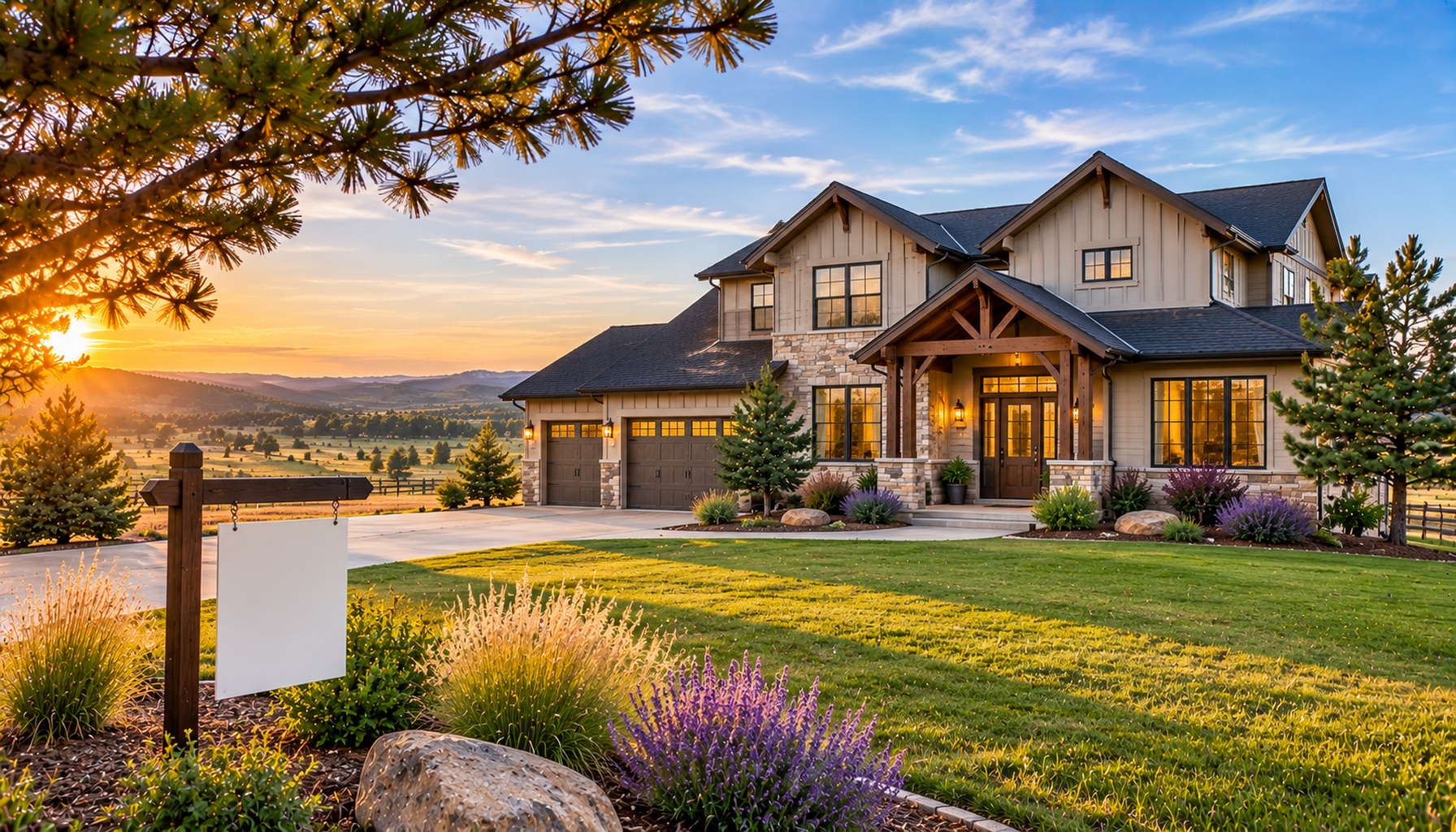
What Is a Seller Concession in Colorado Real Estate?
What is a seller concession in real estate, and how does it work for buyers and sellers in Colorado’s Elbert County and Douglas County markets?
A seller concession is when the seller agrees to pay a portion of the buyer’s closing costs, effectively reducing the cash the buyer needs at the closing table. It is negotiated as part of your purchase contract and subject to lender limits.
Why Seller Concessions Matter Right Now in Colorado
If you are buying or selling anywhere along the Elizabeth, Castle Rock, and Parker corridor in 2026, seller concessions are not just a textbook term. They are an active negotiation tool that shows up in offers every single week.
Here is why. As of October 2026, the median active listing in ZIP 80107 (Elizabeth) has been sitting for 89 days, according to Resideline data. In Douglas County, homes had a median sale-to-list-price ratio of 96.22%, per local MLS reporting, down 0.6 points from the prior year. Meanwhile, 56.64% of Douglas County listings dropped their price, up 4.2 points year over year. Buyers have more houses to choose from and more room to ask for concessions, a shift that both sides of a transaction need to understand.
Having worked in Colorado real estate since 2002, I can tell you that the conversation around concessions changes with every market cycle. Right now, it is one of the most important tools in a buyer’s playbook and one of the smartest strategies a seller can use to get a deal across the finish line.
How a Seller Concession Works in Elizabeth, Elbert County, and Beyond
So what does a seller concession actually look like on paper? You, the buyer, submit an offer on a home. As part of that offer, you ask the seller to contribute a specific dollar amount or percentage of the purchase price toward your closing costs. If the seller agrees, that amount is deducted from their net proceeds at closing and applied to your expenses.
What Seller Concessions Can Cover
Concessions typically go toward costs like:
- Lender origination fees
- Title insurance premiums
- Appraisal fees
- Prepaid property taxes and homeowner’s insurance
- Discount points to buy down your interest rate
- Recording fees and transfer taxes
What concessions cannot cover is your down payment. That cash must still come from you, your savings, or an approved assistance program. For buyers in Elizabeth, it is worth noting that the Colorado Housing and Finance Authority (CHFA) offers down payment assistance programs, and USDA Rural Development Loans with zero down may apply in rural areas outside urbanized zones.
Lender Limits You Need to Know
Your lender, not the seller, sets the ceiling on how much the seller can contribute. The limits vary by loan type and your down payment size:
- Conventional loans: Typically 3% to 9% of the purchase price, depending on your down payment percentage
- FHA loans: Generally up to 6% of the purchase price
- VA loans: Up to 4% of the purchase price
- USDA loans: Up to 6% of the purchase price
With the 2026 conforming loan limit in Elbert County set at $862,500 for a single-family home (a designated high-cost area, per federal housing data), most buyers in Elizabeth and surrounding communities are working within conventional or FHA parameters. That means your concession request needs to be realistic, not just within what the seller will accept, but within what your lender will allow.
When Buyers in Douglas County and Elbert County Should Ask for Concessions
Not every situation calls for a concession request. So how do you know when it makes sense?
You should consider asking when you are cash-constrained at closing but well-qualified for the monthly payment. In a market where the median asking price of active listings in Elizabeth is $657,445, as of October 2026, closing costs can easily run $15,000 to $25,000 or more. A 3% concession on a $650,000 home is $19,500, and that can be the difference between closing and walking away.
You should also consider it when properties have been sitting. With 62 active listings and only 7 pending sales in ZIP 80107 as of October 2026, that pending-to-active ratio of 0.11 tells you sellers are competing for a limited number of motivated buyers. Properties that have lingered 60, 90, even 120 days are often strong candidates for concession negotiations.
What I tell my clients is this: the request itself is not what wins or loses the deal. It is how you position it. A strong pre-approval letter, a clean contract, and a reasonable closing timeline paired with a concession request signals a serious buyer, not a lowball offer.
When Sellers in Castle Rock, Parker, and Highlands Ranch Should Offer Concessions
If you are selling, here is the other side of the coin. Offering a concession proactively in your listing can actually attract more buyers and generate stronger interest, especially in this 2026 market.
Why It Can Be a Smart Seller Strategy
New construction builders in the Elizabeth area and throughout Colorado Springs are already offering closing cost credits and other financial incentives, according to fall 2026 market reporting. If you are selling an existing home, you are competing with that. A proactive concession offer levels the playing field.
In Douglas County, where the median sale price is $720,000 as of August 2026, per FRED data, and homes are taking about 21 days to go under contract, the market is healthier than most of the Denver metro. But even here, 56.64% of listings have seen price drops. Rather than chasing the market with repeated price reductions that erode buyer confidence, a concession keeps your list price intact and puts money where the buyer actually needs it: at closing.
With 23 years of experience in this market and over 138 closed transactions across Elbert County, Douglas County, and surrounding communities, I have seen that the sellers who net the most are not always the ones who refuse to budge. They are the ones who understand what motivates a buyer to write a clean, competitive offer.
Concessions vs. Price Reductions
Think of it this way. A $15,000 price reduction lowers your home’s comparable value in the neighborhood for every future seller. A $15,000 concession achieves the same financial outcome for the buyer without permanently marking down the property’s recorded sale price. For communities like Gambel Oaks, Black Bear, and Swift Creek in Elizabeth, where new construction comps are actively being established, that distinction matters.
How Seller Concessions Work Differently for Acreage and Horse Properties in Elbert County
This is where local expertise really comes into play. If you are buying or selling an acreage property, a horse property, or a home on well and septic in areas like Kiowa or along the County Road 13 corridor in Elizabeth, concessions carry additional nuance.
Days on market for these specialized properties typically run 60 to 90 days or more in Kiowa and rural Elbert County, due to a smaller, more targeted buyer pool. That longer timeline creates natural concession opportunities, but it also means sellers need to price correctly from the start.
One critical detail: on acreage properties with wells, septic systems, and water rights, the inspection process is more complex and more expensive for buyers. Well inspections, septic evaluations, water quality testing, and water court documentation can add $2,000 to $5,000 or more to a buyer’s upfront costs. A seller concession earmarked for these expenses can remove a significant barrier for buyers who are already stretching to reach properties in the $700,000 to $2,500,000 range. As someone who lives on acreage in Elizabeth and works with well and septic properties regularly, I understand these costs firsthand, and I walk both buyers and sellers through exactly how to structure a concession that accounts for them.
What Colorado Buyers and Sellers Should Watch Out For
Seller concessions are powerful, but they come with guardrails you need to respect.
- Appraisal risk: If the appraiser determines the home is overvalued because the concession effectively inflated the purchase price, the deal can fall apart. Your concession request should never push the contract price above fair market value.
- Lender scrutiny: Lenders review concession amounts carefully. If the concession exceeds their threshold, they will reject it or require restructuring.
- Seller net sheet impact: As a seller, always calculate your net proceeds after the concession. A $20,000 concession on a $700,000 sale changes your bottom line, so make sure it still works for your financial goals.
Rated 5 out of 5 stars by 118 past clients, I pride myself on walking through these numbers in detail before my clients ever sign a contract. As one of those clients put it: “She was great at negotiating and fighting for us with some big items that came up in the inspection. I truly didn’t think the transaction was going to go through but she worked her butt off and now I’m living in my dream home.”
Frequently Asked Questions About Seller Concessions in Colorado
What is the maximum seller concession allowed on a conventional loan in Colorado?
For conventional loans, the maximum concession ranges from 3% to 9% of the purchase price, depending on your down payment amount. If you put down less than 10%, the cap is typically 3%. Between 10% and 25% down, it rises to 6%. Above 25% down, you can request up to 9%. These are lender guidelines, not state-specific rules.
Can a seller concession be used to buy down my interest rate in Elbert County?
Yes. One of the most effective uses of a seller concession is purchasing mortgage discount points to lower your interest rate. With Colorado lenders quoting rates in the range of roughly 6.6% to 6.8% as of late 2026, per Freddie Mac survey data, even a modest rate buydown can save you hundreds per month over the life of the loan.
Do seller concessions lower the sale price of the home?
No. A seller concession is recorded separately from the sale price. Your purchase price stays the same on the contract and in public records. This is one key advantage over a straight price reduction, which permanently affects comparable sales data in the neighborhood.
Are seller concessions common in the Elizabeth, Colorado market right now?
In a market with 62 active listings and only 7 pending sales as of October 2026, per Resideline data for ZIP 80107, buyers have meaningful leverage. Concession requests are appearing in a significant share of offers, especially on properties that have been listed for more than 60 days.
Can a seller refuse a concession request?
Absolutely. Concessions are negotiable, not guaranteed. A seller may counter with a lower concession amount, offer alternative terms, or decline entirely. The strength of your overall offer, including price, contingencies, and timeline, determines how much leverage you carry.
How does a seller concession affect my closing costs on a new build in Elizabeth?
National builders in Elizabeth subdivisions like Gambel Oaks and Swift Creek are already offering closing cost credits and incentives. If you are buying resale, requesting a concession puts you on more equal footing with those builder offerings. The mechanics are identical: the seller’s contribution reduces your cash needed at the closing table.
Is a seller concession the same as a seller credit?
Functionally, yes. “Seller concession,” “seller credit,” and “seller contribution toward closing costs” all describe the same thing. The terminology may vary between agents and lenders, but the structure is the same.
Can I negotiate a seller concession after the home inspection in Douglas County?
Yes. In Colorado, you can negotiate repair credits or concessions during the inspection resolution period. If the inspection reveals significant issues, asking the seller to provide a concession rather than making repairs can be a cleaner path to closing for both parties.
Do VA loans allow seller concessions in Colorado?
VA loans allow seller concessions of up to 4% of the purchase price. This can cover closing costs, prepaid items, and even paying off the buyer’s existing debts in some cases. VA buyers in Castle Rock, Parker, and Highlands Ranch frequently use this provision.
Should I ask for a concession or a lower price when buying in Kiowa or rural Elbert County?
It depends on your financial situation. If you have limited cash reserves but qualify comfortably for the monthly payment, a concession is usually more valuable because it reduces your out-of-pocket expense at closing. If you have ample reserves and want to lower your long-term payment, negotiating the price down may make more sense. I help buyers prepare their money situation before they submit an offer.
The Bottom Line on Seller Concessions for Colorado Buyers and Sellers
Whether you are browsing homes for sale in Elizabeth, exploring acreage in Kiowa, or listing your home in Castle Rock or Parker, seller concessions are a practical tool that can make or break a transaction in the 2026 Colorado market. For buyers, they reduce the cash barrier at closing. For sellers, they keep your listing competitive without slashing your price.
The key is knowing how to structure them properly, within lender limits, within market norms, and in a way that keeps both sides moving toward a successful closing. With 23 years in Colorado real estate and deep roots in Elbert County and Douglas County, I am here to help you navigate every detail. Give me a call at 303-881-2707 or reach out through Engle Homes Group with eXp Realty. Let’s make your next move a smart one.