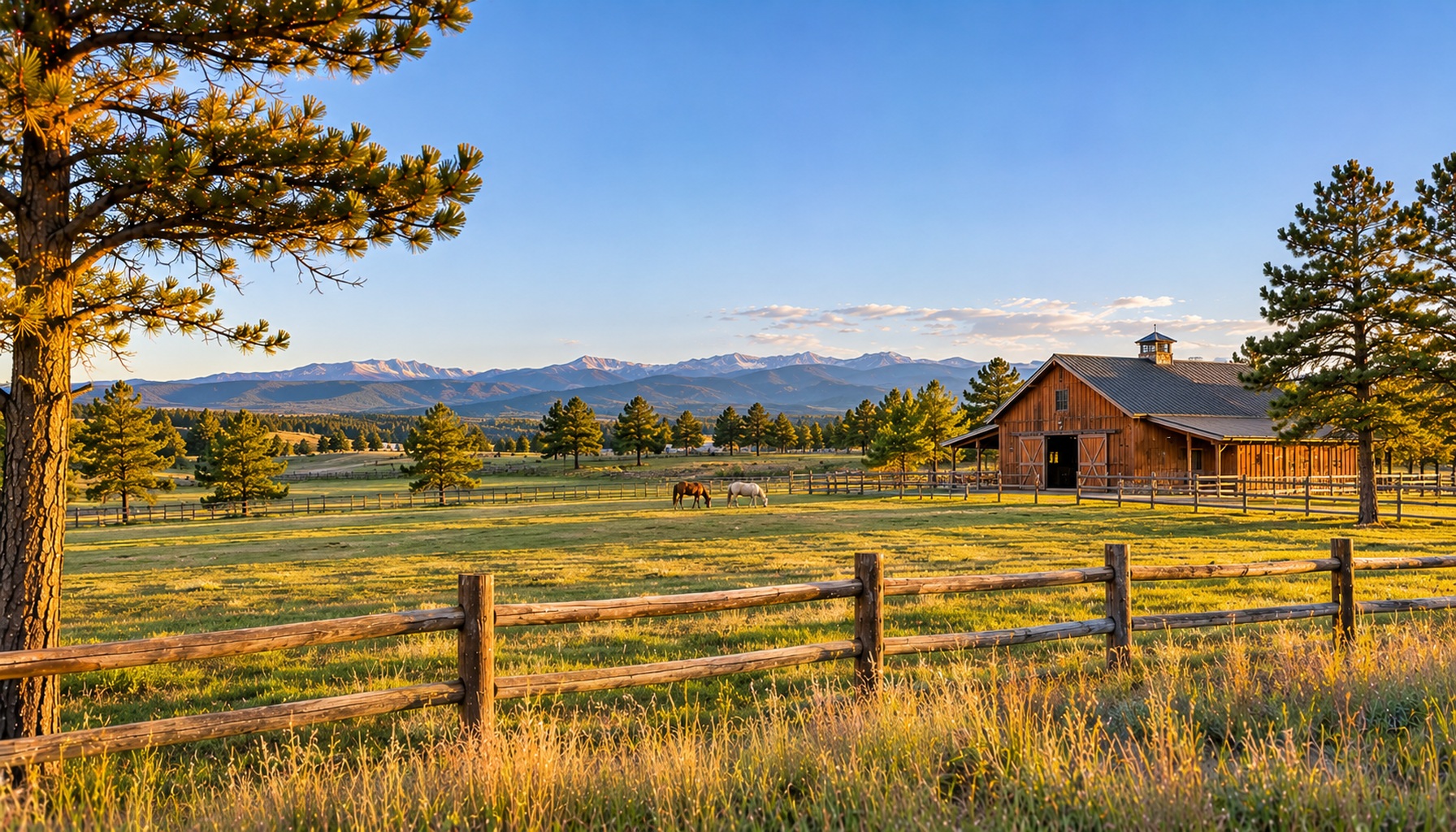
How Much Acreage Do You Need for Horses in Elbert County?
How much acreage do you actually need to keep horses in Elbert County, Colorado?
For most pleasure horse owners in Elbert County, you need a minimum of 5 acres to comfortably keep one to two horses, with at least 1 additional acre per horse beyond that. But the real answer depends on your zoning district, water rights, and how you plan to use the land.
Why Acreage for Horses in Elbert County Matters Right Now
If you have been watching the Elbert County real estate market, you already know the landscape is changing. What I tell buyers looking for horse property is that the window for finding true acreage parcels is narrowing. Historically, Elbert County consisted of 1- to 10-acre parcels, ranch properties, and small rural subdivisions, per Denver Gazette reporting from May 2026. But developers have been constructing hundreds of homes on smaller lots in new developments, introducing a housing type that was largely new to the county’s rural areas.
That means the supply of genuine horse-ready acreage is shrinking. Acreage properties in Elbert County are expected to continue appreciating as scarcity increases, according to the same Denver Gazette analysis. If you are serious about horse property, understanding how much land you need, and what zoning allows, will help you act with confidence instead of scrambling later.
With 23 years in Colorado real estate and a specialization in horse properties, acreage, wells and septic, and water rights, I have helped buyers navigate exactly these decisions across Elizabeth, Kiowa, Franktown, and the surrounding communities.
Elbert County Zoning Districts and What They Allow for Horses
Before you fall in love with a property, you need to understand Elbert County’s zoning framework. Not every parcel allows horses, and the rules vary significantly by district.
A-1 Agricultural Zoning
This is the predominant zoning across Elbert County and the most horse-friendly. A-1 allows agricultural uses, including livestock, by right. Minimum lot sizes in A-1 are typically 35 acres. If you are planning a larger operation with six or more horses, or considering boarding and training, this is the zoning district you want. Properties near Kiowa along CR 162 and CR 142 often fall within A-1 designations.
A-2 Agricultural Residential Zoning
A-2 zoning also allows horses and livestock, with minimum lot sizes typically around 5 acres. This is where the majority of pleasure horse owners in Elbert County find their sweet spot. Communities like Spring Valley Ranch, Wild Pointe, and Elkhorn Ranch in the Elizabeth area frequently carry this classification. You get enough room for turnout, a small arena, and a barn without needing to manage 35+ acres.
Residential Zones (R-1 through R-3)
Here is where things get tricky. Smaller-lot residential zones may restrict or entirely prohibit livestock. Newer subdivisions, like some of the higher-density developments along Singing Hills Road and County Road 158 in Elizabeth, often have covenants that do not allow horses at all. Always verify covenants and HOA restrictions before assuming a property works for your needs.
How Many Acres Per Horse You Actually Need in Elbert County
So what does the math look like? Here is what I recommend based on Colorado State University Extension guidelines and real-world conditions in Elbert County’s semi-arid climate.
- 1 to 2 horses (pleasure riding): 5 acres minimum. This gives you room for turnout, a small riding arena, a barn or run-in shed, and enough buffer to manage manure and drainage properly.
- 3 to 5 horses (small operation): 10 to 20 acres. You will want room for pasture rotation, hay storage, and separate paddocks.
- 6 to 10 horses (boarding or training): 20 to 35 acres. At this level, you need a full arena, multiple paddocks, a larger barn, and serious water infrastructure.
- 10+ horses (commercial operation): 35+ acres. A-1 zoning is preferred, and you may need a special use permit depending on the scope of your operation.
Here is something most online guides will not tell you: Elbert County receives approximately 15 to 17 inches of annual precipitation. That is semi-arid territory. Pasture alone will not sustain your horses year-round. Supplemental hay is almost always required, and you need a drylot or sacrifice area to prevent overgrazing. The flat, eastern portions of the county tend to be more suitable for large-scale operations, while the ponderosa pine terrain closer to Elizabeth offers beauty and privacy but can create mud management challenges in clay-heavy soil areas.
Water Rights and Well Permits: The Hidden Deal-Breaker in Elbert County
You could find the perfect 10-acre parcel with a barn already standing, and it could still fall apart over water. Colorado water law is complex, and in Elbert County, this is where I spend a significant amount of time educating buyers.
Most Elbert County residential wells are permitted for domestic use only, which typically covers up to 3 livestock. If you are planning a larger operation, you may need augmented water rights or a commercial well permit through the Colorado Division of Water Resources.
Each horse requires approximately 10 to 12 gallons of water per day. On a hot August afternoon along CR 17 between Elizabeth and Kiowa, that number can climb higher. Before you make an offer on any horse property, you need to verify the well’s permitted capacity and recovery rate.
Having closed 138 transactions and specializing in wells, septic, and water rights, I can tell you this is the single most common area where buyers get surprised. It is not glamorous, but it is the difference between a property that works and one that becomes a headache.
What Horse Properties in Elbert County Actually Cost in 2026
Let me give you the financial picture so you can plan accordingly. Based on current market data, acreage properties with 5+ acres in Elbert County typically range from $745,000 to $1,875,000 or more. A 40-acre parcel near Kiowa has been listed at $1,700,000, according to regional listing data.
The broader Elbert County market context: the median home value is $709,800, per U.S. Census Bureau ACS 2024 5-Year Estimates. The average sale price across Elbert County is $684,410, with an average cost per square foot of $263. Homes in Elbert County typically spend about 96 days on the market, according to regional market tracking data.
Here is what that means for your budget. At a $700,000 median with a 20% down payment ($140,000) and a 30-year fixed at 7.0%, your estimated principal-and-interest payment comes to roughly $3,725 per month. Based on the 28/36 housing cost guideline, you would want a household income of roughly $124,189 to $159,672 per year.
And that is before you factor in the cost of fencing, a barn build-out, arena footing, or any other horse-specific infrastructure you might need to add. What I always advise clients is to budget for the land, the home, and the horse infrastructure as three separate line items.
Covenants, Fencing, and the Details That Catch Buyers Off Guard in Elbert County
Even in unincorporated Elbert County, you are not operating in a rule-free zone. Many older subdivisions have covenants that restrict the number of horses, dictate specific fencing types, or regulate where you can place outbuildings. Established acreage communities like Spring Valley Ranch and Wild Pointe offer mature ponderosa pines and privacy, but each has its own set of recorded restrictions you need to review before closing.
Colorado is an “open range” state in many unincorporated areas, which has implications for your fencing obligations. According to Elbert County’s common questions, Elbert County does not mandate a specific fencing type for horses, but your covenants might. And practically speaking, safe horse fencing, whether it is no-climb wire, pipe and cable, or vinyl rail, is an investment you will make regardless of what the rules require.
One more thing: if you are looking at property along the Ponderosa Drive corridor or off Nolte Road in the Saddleback area near Elizabeth, verify whether the newer development covenants have carved out livestock permissions. Some do; some absolutely do not.
Frequently Asked Questions
Can you keep horses on 2 acres in Elbert County?
It depends on your zoning district. In A-2 agricultural residential zoning, the minimum lot size is typically 5 acres for properties allowing livestock. While you might find a 2-acre lot, it would likely fall within a residential zone where horses may be restricted or prohibited. Always check both county zoning and any recorded covenants before assuming a smaller parcel will work for horses.
How many horses can you have per acre in Elbert County?
Elbert County does not impose a strict “acres per horse” formula in agricultural zones. However, Colorado State University Extension recommendations suggest a minimum of 2 acres for your first horse and 1 additional acre for each horse after that. In Elbert County’s semi-arid climate, you should plan for supplemental hay regardless of your acreage.
Do you need a special permit to board horses in Elbert County?
For small-scale horse keeping on A-1 or A-2 zoned land, you generally do not need a special permit. However, commercial boarding or training operations, especially those with 10 or more horses, may require a special use permit. Your water permit also becomes a factor, as domestic wells typically cover only up to 3 livestock.
What is the difference between A-1 and A-2 zoning in Elbert County?
A-1 (Agricultural) zoning has a minimum lot size of typically 35 acres and is designed for full agricultural operations. A-2 (Agricultural Residential) zoning allows livestock on smaller parcels, typically 5 acres minimum. Both permit horses by right, but A-1 gives you significantly more room for larger operations.
How much water does a horse need per day in Colorado?
Each horse requires approximately 10 to 12 gallons of water per day under normal conditions. During Colorado’s hot summer months, consumption can increase. In Elbert County, where properties rely on individual wells, you need to confirm your well’s permitted capacity and actual recovery rate before committing to a property.
Are there HOA restrictions on horses in Elizabeth, Colorado?
Some Elizabeth subdivisions do restrict livestock. Newer developments on smaller lots, particularly in Cobblestone Ranch off Singing Hills Road and Pine Lane, may prohibit horses entirely through recorded covenants. Older acreage communities tend to be more permissive, but you must review each community’s specific governing documents.
What kind of fencing is best for horses in Elbert County?
While Elbert County does not mandate a specific fencing type, safe options for horses include no-climb wire fencing, pipe and cable, and vinyl rail. Barbed wire, which is common on cattle operations throughout the county, is generally not recommended for horses due to injury risk. Your covenant restrictions may also dictate acceptable materials.
Can you build a barn on any property in Elbert County?
Building a barn or outbuilding in unincorporated Elbert County requires a building permit through the county’s building department. Setback requirements and maximum lot coverage percentages vary by zoning district. Covenants in planned communities may add additional restrictions on building size, placement, and materials.
How far is Elizabeth, Colorado from Denver for commuting horse owners?
Elizabeth to the Denver Tech Center is approximately 50 to 60 minutes via US-86 to E-470. To Castle Rock, the commute is approximately 25 minutes via CO-86 West. Many horse property owners in the Elizabeth and Kiowa areas plan their routines around a 44-minute average commute, per census data showing the median commute time in Kiowa at 44.2 minutes.
What should I look for when evaluating a horse property in Elbert County?
Focus on these critical factors in this order: water rights and well permit capacity, zoning classification, recorded covenants, soil type and drainage, quality of existing outbuildings (barns, arenas, run-in sheds), fencing condition, road access (many properties are on unpaved county roads), and proximity to veterinary and farrier services. Buying acreage in Elbert County requires checking these details before making an offer.
The Bottom Line
Finding the right horse property in Elbert County comes down to matching your goals with the right acreage, zoning, and water resources. Five acres is the practical minimum for most pleasure horse owners, but your specific situation, whether you are keeping two trail horses or running a small boarding operation, will determine whether you need 10, 20, or 35+ acres.
With acreage parcels becoming scarcer as development continues across western Elbert County, the time to get educated and get moving is now. I live on acreage in Elizabeth with my own horses, and I have spent 23 years helping buyers find exactly the right property across Elbert County, Douglas County, and the surrounding communities. Rated 5 out of 5 stars by 118 past clients, I specialize in horse properties, acreage, wells and septic, and water rights. If you are ready to start your search or want to talk through what your horses actually need, contact me at 303-881-2707. Let’s find your land.