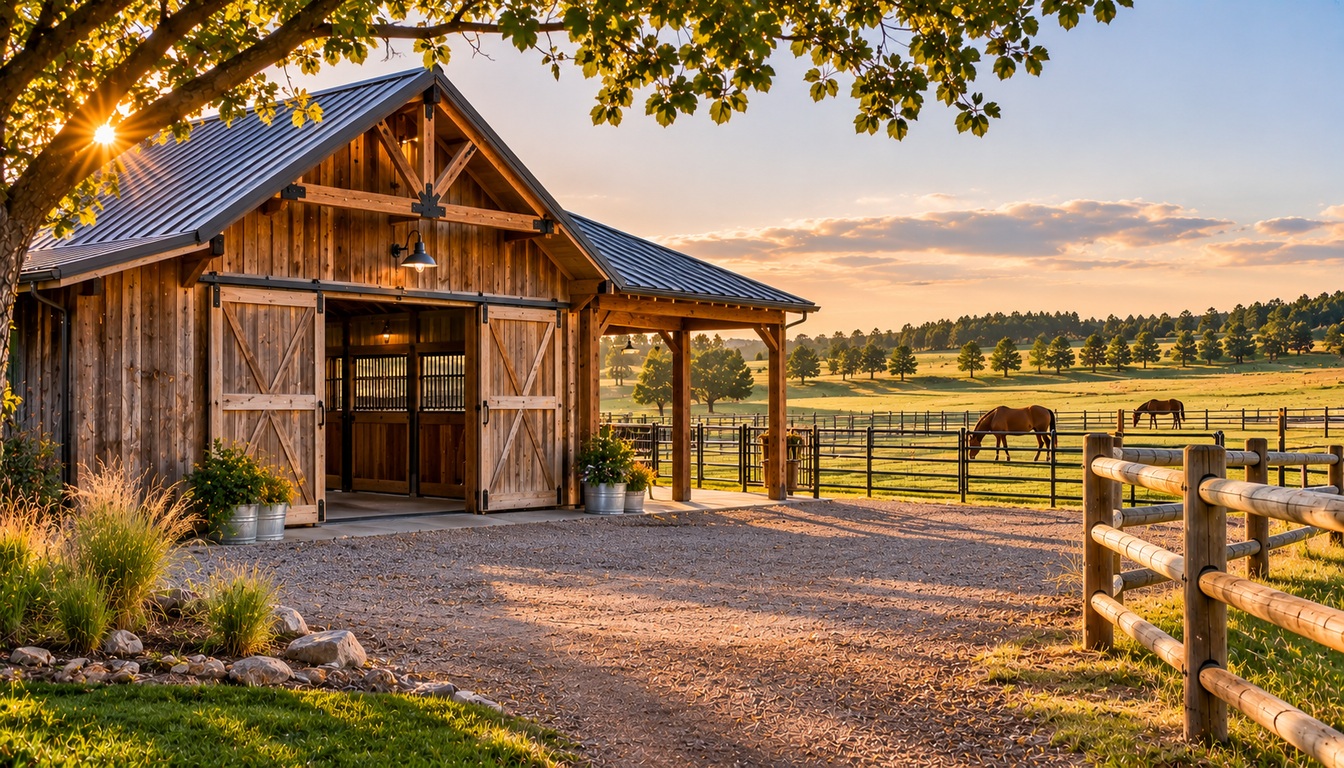
Can You Keep Horses on Residential Land in Colorado?
Can you keep horses on residential land in Colorado, and what zoning rules apply in Elbert County, Douglas County, and Colorado Springs?
Yes, you can keep horses on residential land in many parts of Colorado, but the rules change dramatically depending on which county or municipality your property sits in. There is no statewide standard, so you need to verify your specific zoning designation before buying.
Why Keeping Horses in Colorado Requires Local Knowledge Right Now
If you are shopping for horse property along the Front Range, from Elizabeth and Kiowa down to Castle Rock and Colorado Springs, you are navigating one of the most fragmented zoning landscapes in the country. Colorado does not mandate a statewide minimum acreage for horses. Every regulation is set at the county or municipal level through specific zoning ordinances, per Elbert County and Douglas County zoning codes.
That means the answer to “can I keep my horses here?” can flip completely just by crossing a county line. I have worked in Colorado real estate since 2002, and I can tell you that this single issue, zoning verification, is the number one source of confusion for buyers searching for acreage in Elbert County and Douglas County. What I always tell my clients is this: fall in love with the land second. Fall in love with the zoning first.
With 23 years of experience and a specialization in horse properties, wells and septic, and water rights, I have seen what happens when buyers skip this step.
Elbert County Horse Rules: Elizabeth, Kiowa, and Elbert
Elbert County is widely regarded as one of the most horse-friendly counties along the Front Range, and it is where I live and work every day. If you are looking at homes for sale in Elizabeth or homes for sale in Elbert County, here is what you need to know.
How Many Horses Can You Keep?
Per Article XIV of the Elbert County Zoning Regulations, horses for personal use are allowed in most residential zoning districts as long as the number does not exceed one horse per half-acre. The county uses an Animal Unit (AU) system: one mature horse equals 1.0 Animal Unit.
Here is how it breaks down by zone:
- R-1 Zone: Allows two equine. No cattle, sheep, or goats permitted.
- R-2 Zone: No large animals allowed at all. This is critical, and many buyers miss it.
- RA, RA-2, RA-1, AR, and A-2 Zones (parcels under 35 acres): Maximum density of one animal unit per half-acre.
So on a 10-acre parcel in Kiowa zoned AR or A-2, you could legally keep up to 20 animal units, per Elbert County regulations. That is generous compared to neighboring counties.
Infrastructure and Setback Requirements
When your animal count reaches one unit, a shelter is required, per county code. If the density exceeds one animal unit per 35 acres, you must also provide a containment area (corral) for feeding. Elbert County requires barns, hay sheds, and outdoor arenas to maintain at least 50-foot setbacks from property lines.
Driving along County Road 158 south of Elizabeth or Elbert Road through Kiowa, you will see exactly the kind of properties that fit this profile: wide-open parcels with modest barns set well back from the fenceline. Elizabeth Feed & Farm Supply on Hwy 86 is where most local horse owners stock up, and the staff there can tell you exactly which fencing and shelter materials hold up best in this climate.
Douglas County Horse Zoning: Parker, Castle Rock, and Franktown
Douglas County is more suburban than Elbert County, but it absolutely supports equestrian use on appropriately zoned and sized parcels. If you are eyeing the Hwy 83 corridor between Parker and Castle Rock, known locally as “Horse Alley,” you will find some of the premier training centers and boarding facilities in the state.
The 2.5-Acre Minimum Rule
Douglas County requires a minimum of 2.5 acres for your first two horses, per the Douglas County zoning resolution. Beyond that, the county applies the Animal Unit system. On Estate Residential (ER) and Rural Residential (RR) lots ranging from 2.3 to 8.9 acres, the maximum density is one animal unit per half-acre.
Here is the part that catches people off guard: you must subtract the “home site,” typically the first 1.0 acre containing the house and driveway, before calculating your total horse capacity.
Castle Rock Specifics
Most Castle Rock equestrian homes fall under the Large Rural Residential (LRR) designation, which typically requires a minimum of 5 acres for horse privileges, per Douglas County zoning. Building codes here cap accessory building heights at 35 feet, which can be tight if you are planning an indoor arena with professional-grade clearances. You must also maintain a 50-foot setback from all property lines for any structure housing livestock.
In agricultural districts, manure piles must be set back at least 100 feet from any lot line, well, or body of water. That detail alone narrows the list of viable horse properties in Castle Rock significantly.
What About Highlands Ranch?
If you are looking at Highlands Ranch, I need to be straightforward: standard residential lots there are too small and too restrictively covenanted for horse keeping. Buyers seeking equestrian properties near Highlands Ranch should look at unincorporated Douglas County parcels to the south and east.
Colorado Springs and Monument: El Paso County Rules
Colorado Springs is actually more permissive than most cities its size. Per City Code Subsection 7.3.105.L, stables and corrals are permitted within any residential zone district, provided the lot is at least 37,000 square feet (roughly 0.85 acres) and all buildings and corrals maintain a 55-foot setback from the building envelope of the adjacent lot.
You are limited to two hoofed animals per household in most cases, though three or four are allowed when the lot size and setback standards are met, per the city’s animal regulations.
The practical reality? Most standard suburban lots within Colorado Springs are far smaller than 37,000 square feet. So while the code technically permits horses in any residential zone, your options narrow quickly once you start measuring actual lot sizes.
For Monument, you need to verify whether your property falls within town limits or unincorporated El Paso County, as the regulations differ.
The Two Biggest Mistakes Horse Property Buyers Make in Colorado
Mistake 1: Ignoring HOA Covenants
This is the most common pitfall I see. Many “ranchette” developments across Elbert County and Douglas County are governed by private HOA covenants that are significantly stricter than county law. Colorado courts generally uphold private contract law over municipal code. If a covenant limits you to two horses on 35 acres, the county’s more generous allowance will not protect you from a legal dispute.
What I tell every buyer looking at horse property: read every page of the CC&Rs before you write an offer. Not the summary. The actual document.
Mistake 2: Assuming Your Well Permit Covers Livestock
Your well permit is the most critical document in a rural real estate transaction. Many properties under 35 acres operate on “Household Use Only” permits issued by the Colorado Division of Water Resources. These permits do not legally allow you to water a single horse. You need a permit that specifically includes “Domestic and Livestock” use.
Having closed over 138 transactions and with 118 five-star reviews from past clients, I can tell you that water rights verification is one of the things I personally check on every acreage listing. It is that important. Learn more about buying acreage in Elbert County and what to check before you write an offer.
How SB25-149 Changes the Game for Colorado Horse Owners in 2026
Colorado’s SB25-149, known as the “Equestrian Bill of Rights,” introduces a significant shift for horse owners across the Front Range. This legislation creates the concept of “Keystone Properties,” specific parcels such as boarding facilities or trail access points that anchor a neighborhood’s equestrian character. By identifying these properties, the law makes it harder for developers to rezone adjacent land for high-density housing that would eliminate trail access.
For buyers and sellers in Elizabeth, Kiowa, and the Hwy 83 corridor, this legislation is directly relevant. It empowers local governments to designate specific “Equestrian Zones” as protected asset classes. If you own horse property in these areas, your property value now has an additional layer of legal protection.
Frequently Asked Questions
Can I keep horses on any residential lot in Colorado?
No. Colorado has no statewide standard. Your ability to keep horses depends entirely on your county or municipality’s zoning code, your lot size, your specific zoning designation, and any HOA covenants. Some residential zones, like Elbert County’s R-2, prohibit large animals entirely.
How many horses can I keep on 5 acres in Elbert County?
In Elbert County’s RA, AR, or A-2 zones, the maximum density is one animal unit per half-acre, per county zoning regulations. On 5 acres, that could allow up to 10 animal units. However, you should confirm your specific zoning designation with the county planning department.
How many horses can I keep on 5 acres in Douglas County?
Douglas County requires you to subtract the 1.0-acre home site first, leaving 4 usable acres. At one animal unit per half-acre on ER and RR lots, that allows approximately 8 animal units, per county zoning resolution. The first two horses require a minimum of 2.5 acres.
Do I need a special well permit to water horses in Colorado?
Yes. A “Household Use Only” well permit does not legally allow you to water livestock, per the Colorado Division of Water Resources. You need a permit that specifically includes “Domestic and Livestock” use. This is one of the most overlooked details in rural property transactions.
Can my HOA prohibit horses even if county zoning allows them?
Yes. Colorado courts generally uphold private contract law (HOA covenants) over municipal code. Always review the full CC&Rs before purchasing. If the covenant says no horses, the county allowance will not override it.
Can I board other people’s horses for income on my property?
In most Elbert County residential-agricultural zones, boarding more than three horses for a fee requires a Special Use Permit, per county regulations. This involves a public hearing and evaluation of traffic impact, manure management, and proximity to neighbors.
What setbacks apply to horse barns and corrals in Colorado?
Requirements vary. Elbert County requires at least 50 feet from property lines. Douglas County requires 50 feet for livestock structures. Colorado Springs requires 55 feet from the building envelope of the adjacent lot. Manure storage in Douglas County must be 100 feet from lot lines, wells, or water.
What is an Animal Unit and how does it affect me?
An Animal Unit (AU) is a standardized measurement counties use to regulate livestock density. One mature horse equals 1.0 AU. Counties set limits based on animal units per acre rather than simply counting heads. This system applies across Elbert County, Douglas County, and El Paso County.
Can I keep horses in Highlands Ranch?
Standard residential lots in Highlands Ranch are too small and too restrictively covenanted for horse keeping. Buyers seeking equestrian property near Highlands Ranch should look at unincorporated Douglas County parcels to the south and east along the Hwy 83 corridor.
What does the 2026 Equestrian Bill of Rights (SB25-149) mean for horse property owners?
SB25-149 creates “Keystone Properties” that anchor equestrian neighborhoods and makes it harder for developers to rezone adjacent land for high-density housing. It empowers local governments to designate “Equestrian Zones” as protected asset classes, adding a layer of property value protection for horse property owners.
The Bottom Line
You can absolutely keep horses on residential land in Colorado, but only if you buy the right property in the right zone with the right well permit and without restrictive HOA covenants. The difference between Elbert County’s generous one-horse-per-half-acre density and Douglas County’s 2.5-acre minimum for your first two horses is substantial, and both differ from Colorado Springs’ 37,000-square-foot lot requirement. Every detail matters.
I live on acreage in Elizabeth with my own horses, and I have spent 23 years helping buyers navigate wells, septic, water rights, and zoning across Elbert County and Douglas County. If you are searching for horse property, whether it is a 5-acre ranchette near Kiowa or a custom build site along the Hwy 83 corridor, I would love to walk you through the specifics for the exact parcel you are considering. Reach out to me, Marjorie Engle with Engle Homes Group at eXp Realty, at 303-881-2707.