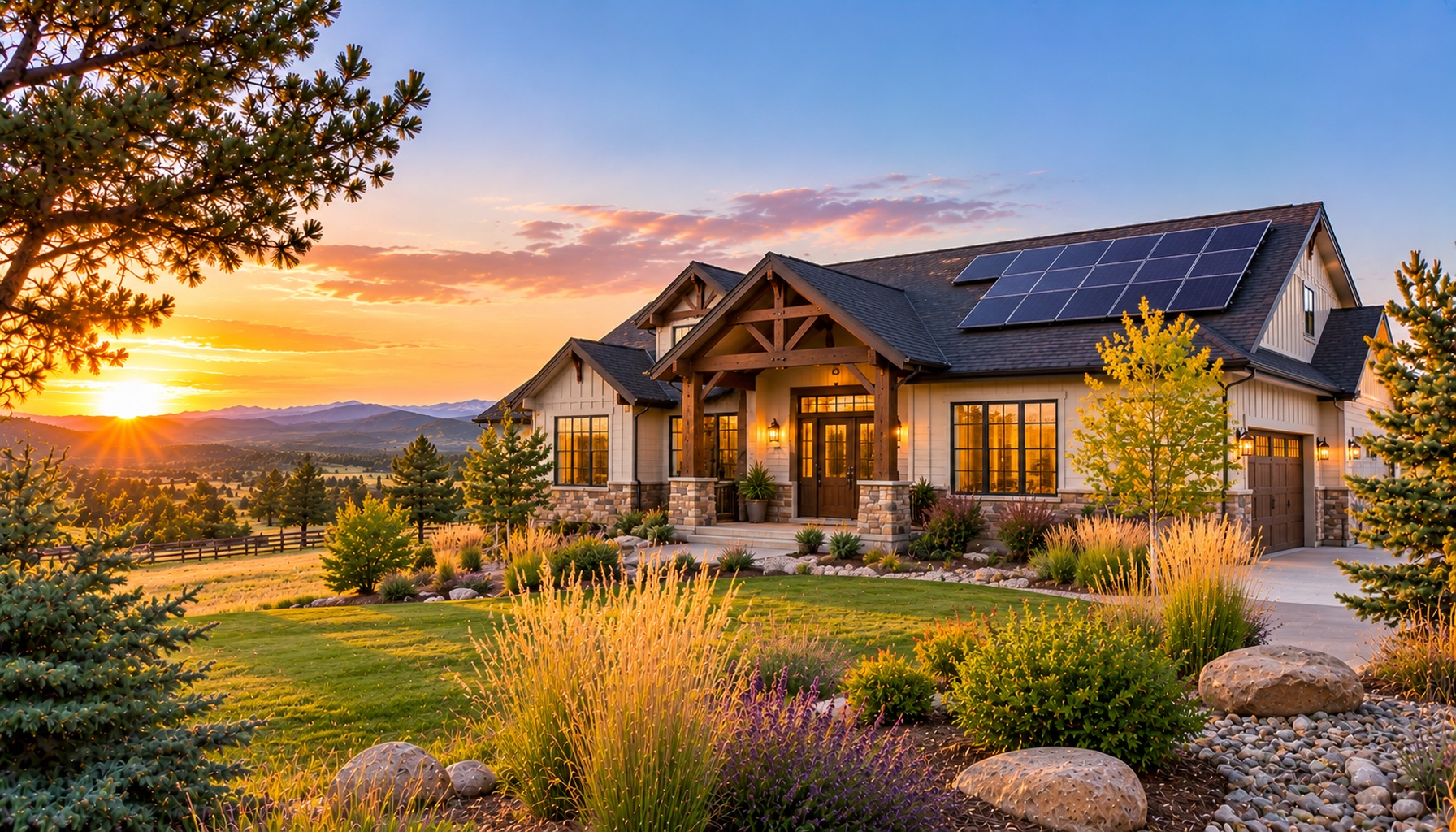
How to Choose a Custom Home Builder in Douglas County, Colorado
How do you choose the right custom home builder when building on acreage in Douglas County or Elbert County?
You choose a custom home builder by evaluating their local experience with your specific terrain, verifying their references and financial stability, and confirming they understand the permitting, well, septic, and water-rights requirements unique to your building site.
Why Choosing the Right Builder in Douglas County Matters Right Now
If you are considering a custom build in Douglas County, Elbert County, or the surrounding communities of Elizabeth, Castle Rock, Parker, or Franktown, your builder decision is arguably the most consequential choice you will make in the entire process. And right now, the stakes are higher than usual.
Builders have constructed hundreds of homes on smaller lots in developments across Elbert County in recent years, according to the Denver Gazette (May 2026), introducing housing types that were largely new to the county’s rural areas. That building boom means there are more builders in the area than ever, but not all of them understand the specific challenges of building on five, ten, or thirty-five acres with well and septic systems. I have been working Colorado real estate since 2002, and I have watched builders come and go through every cycle. The ones who last are the ones who truly know this land. The ones who disappear mid-project are the ones who underestimated it.
With 23 years of experience and a specialty in custom homes, new construction, and luxury properties across this corridor, what I consistently tell my clients is this: the right builder will save you money, time, and heartbreak. The wrong one can cost you all three.
Understanding Douglas County and Elbert County Building Requirements
Before you even start interviewing builders, you need to understand what makes building in this part of Colorado different from a suburban infill lot in the Denver Metro.
Wells, Septic, and Water Rights
In Elizabeth, Kiowa, Elbert, and much of unincorporated Douglas County, you are not connecting to municipal water and sewer. You are drilling a well and installing a septic system. Many parcels in the Kiowa area involve shared wells and adjudicated water rights, which adds another layer of complexity. Your builder needs to know how to coordinate well permits, perc tests for septic design, and water-court documentation before breaking ground, not after.
I live on acreage in Elizabeth myself, and I work closely with a developer on building communities in Elbert County. That firsthand experience is why I always recommend that buyers ask their prospective builder one pointed question: “How many homes have you built on well and septic in this county?” If the answer is fewer than a handful, keep looking.
Terrain and Soil Conditions
The rolling short-grass prairie between Elizabeth and Kiowa along County Road 158 (Singing Hills Road) looks beautiful. It also presents grading, drainage, and expansive-soil challenges that a builder accustomed to flat suburban pads may not anticipate. Your builder should have geotechnical reports in their standard process, not as an afterthought.
How to Evaluate a Custom Builder’s Track Record in Castle Rock, Parker, and Beyond
So how do you actually vet a builder? Here is the framework I walk my clients through.
Check Their Portfolio Against Your Vision
A builder who specializes in 2,000-square-foot production homes in Highlands Ranch is not the same as one who builds 4,500-square-foot custom homes on ten acres outside Franktown. Ask to see completed projects that match your scope, your price range, and your land type. Drive by those homes. Knock on a door and ask the homeowner how the process went. Serious builders welcome this kind of scrutiny.
Verify Licensing, Insurance, and Financial Health
Colorado does not require a general contractor license at the state level, which means the burden of verification falls on you. Confirm that your builder carries general liability insurance, workers’ compensation coverage, and that their subcontractors are properly insured as well. Request a bank reference or financial statement. In a market where homes in Elbert County average around $684,410 in sale price (per recent sales data) and luxury acreage properties reach well above $1M, you are trusting this builder with a significant investment.
Ask for a Detailed, Transparent Contract
The contract should spell out allowances for every category: cabinets, countertops, fixtures, flooring, appliances, landscaping. “Allowance” is where budget surprises hide. A quality builder in Douglas County will give you a line-item breakdown and walk you through what is included versus what triggers a change order. If a builder hands you a two-page contract for a $900K custom home, that is a red flag.
Questions You Should Ask Every Builder Before Signing in Elbert County
Not every question is created equal. Here are the ones that separate the careful buyer from the one who ends up in a dispute eighteen months later.
- “What is your current project load?” A builder juggling twelve homes simultaneously with a small crew is going to cut corners on yours. In a corridor stretching from Parker to Kiowa, drive times between job sites add up. Ask how many active projects they are managing and how many superintendents they employ.
- “Who are your subcontractors, and how long have you worked with them?” Consistent sub crews are a sign of a builder who pays fairly, manages well, and delivers quality. High sub turnover is a warning sign.
- “How do you handle change orders?” Every custom build has changes. The question is whether those changes are documented, priced transparently, and approved in writing before work begins.
- “Will you provide a construction timeline with milestones?” In Elbert County, where homes spend an average of about 96 days on the market before selling (per recent county-wide data), your build timeline directly affects your financial planning, especially if you are selling a current home and coordinating move dates.
Why Your Realtor Should Be Involved Before You Choose a Builder
Here is something many buyers do not realize: your real estate agent should be part of the builder selection process, not just the land purchase.
Having closed over 138 transactions and with 118 client reviews at a 5/5-star average, I have seen how the builder relationship unfolds from every angle. What I tell my clients is that a Realtor with custom-build experience can identify red flags in a builder’s contract, negotiate on your behalf, and ensure the home is appraised properly at completion. In Douglas County, where the median sale price sits around $720,000 as of August 2026 (per FRED data), your custom build needs to hit comparable values for financing to work smoothly.
A Realtor who understands land, water rights, and the local permitting process can also help you avoid buying a parcel that looks perfect but presents building challenges a less experienced agent would miss entirely. Along Hess Road in Elizabeth, for example, horse property parcels can vary dramatically in well yield and soil suitability from one lot to the next.
As one past client described the experience: “She was not only attentive and knowledgeable, but also genuinely caring in a way that made us feel supported as people, not just clients. She was always there when we had questions, no matter how small, and if she didn’t have an answer right away, she took the time to find it and follow through.”
That level of follow-through is exactly what you need when navigating a custom build.
Red Flags That Should Make You Walk Away From a Builder
Not every builder deserves your business. Here are the warning signs I have learned to spot over 23 years.
- No fixed-price option. If a builder will only work on a cost-plus basis with no guaranteed maximum, your budget is a suggestion, not a commitment.
- Resistance to third-party inspections. Your builder should welcome independent inspections at every phase: foundation, framing, mechanical, and final. If they push back, ask yourself why.
- Vague timelines. “About a year” is not a timeline. A credible builder in the Elizabeth, Castle Rock, or Monument corridor will give you a phased schedule with specific milestone dates.
- No local references. If they cannot point you to completed homes within Douglas County or Elbert County, they have not proven themselves in this specific environment.
- Pressure to skip buyer representation. A builder who discourages you from having your own Realtor is a builder who prefers you do not have an advocate.
Frequently Asked Questions
How long does it take to build a custom home in Douglas County?
Most custom homes in the Douglas County and Elbert County corridor take between ten and fourteen months from breaking ground to move-in, depending on size, complexity, and weather. Colorado’s unpredictable spring storms and winter conditions can add weeks. Your builder should account for seasonal delays in their timeline and communicate proactively when they occur.
Do I need a Realtor if I am building a custom home near Elizabeth?
Yes. Your Realtor protects your interests in the land purchase, reviews the builder contract, ensures proper appraisal at closing, and understands local requirements like well permits and water rights. With 23 years of experience and a specialty in custom builds and new construction, I serve as a second set of eyes on every detail.
What is the typical cost per square foot for a custom build in Elbert County?
Costs vary widely depending on finishes, site preparation, and whether you need a well and septic system. Recent sales data shows Elbert County homes averaging about $263 per square foot. Custom builds with premium finishes and acreage site work typically come in higher. Always get a detailed allowance breakdown before committing.
How do I verify a builder’s reputation in Castle Rock or Parker?
Ask for references from completed projects within the last two years. Check the Better Business Bureau and your county’s building department for complaints. Drive past their finished homes. Talk to homeowners who have lived in a builder’s home for at least a year, after the new has worn off and any warranty issues have surfaced.
What should a custom home builder contract include?
Your contract should include a detailed scope of work, line-item allowances for all finish categories, a construction timeline with milestones, a change-order process, warranty terms, a payment draw schedule tied to completed phases, and provisions for dispute resolution. If any of these are missing, negotiate them in before signing.
Can I use my own land for a custom build in Kiowa or Franktown?
Absolutely. Many buyers in Kiowa and Franktown purchase raw land parcels ranging from ten to forty or more acres and then select a builder. Confirm your parcel’s zoning, water availability, and access before committing. Raw land in this area routinely trades between $150,000 and $400,000 depending on size and water access.
What financing options exist for custom home construction in this area?
Construction-to-permanent loans are the most common. Elbert County’s 2026 conforming loan limit is $862,500 (per LoanGraphs data), which is higher than the national baseline of $832,750. If your build exceeds that threshold, you will need jumbo financing, which typically requires a larger down payment and stricter qualification.
How do I protect myself from cost overruns on a custom build?
Insist on a guaranteed-maximum-price contract or a fixed-price contract with clearly defined allowances. Build a contingency of at least ten percent into your budget. Review every change order in writing before authorizing the work. Your Realtor can help you evaluate whether a builder’s pricing structure is realistic.
Should I hire an independent inspector during the build process?
Yes. Independent inspections at the foundation, framing, and pre-drywall stages catch issues before they become expensive problems. County inspections are required but focus on code compliance, not quality. A private inspector evaluates workmanship, which is where most homeowner complaints originate.
What makes building in Elbert County different from building in the Denver Metro?
Elbert County properties typically involve well and septic systems rather than municipal utilities, larger lot sizes requiring more extensive site work, and county-specific permitting processes that differ from suburban municipalities. The terrain, soil conditions, and water availability vary significantly from one parcel to the next, which is why working with professionals who know this specific area is essential.
The Bottom Line
Choosing a custom home builder in Douglas County or Elbert County is not a decision you make from a website gallery. It requires asking hard questions, verifying references on the ground, and understanding the unique demands of building on acreage with wells, septic systems, and Colorado’s unpredictable terrain. The builders who thrive here are the ones who know this land as well as you want to know it.
If you are exploring new build homes in Elizabeth, searching for homes for sale in Elbert County, or considering a custom build anywhere from Franktown to Monument, I would love to help you navigate the process. As a top realtor in Elbert County and a recognized top 5% producer with 23 years of hands-on experience, I bring the kind of local knowledge that protects your investment and keeps your build on track. Reach out to me, Marjorie Engle with Engle Homes Group, at 303-881-2707 to start the conversation, or contact us online for more information about buying acreage in Elbert County.