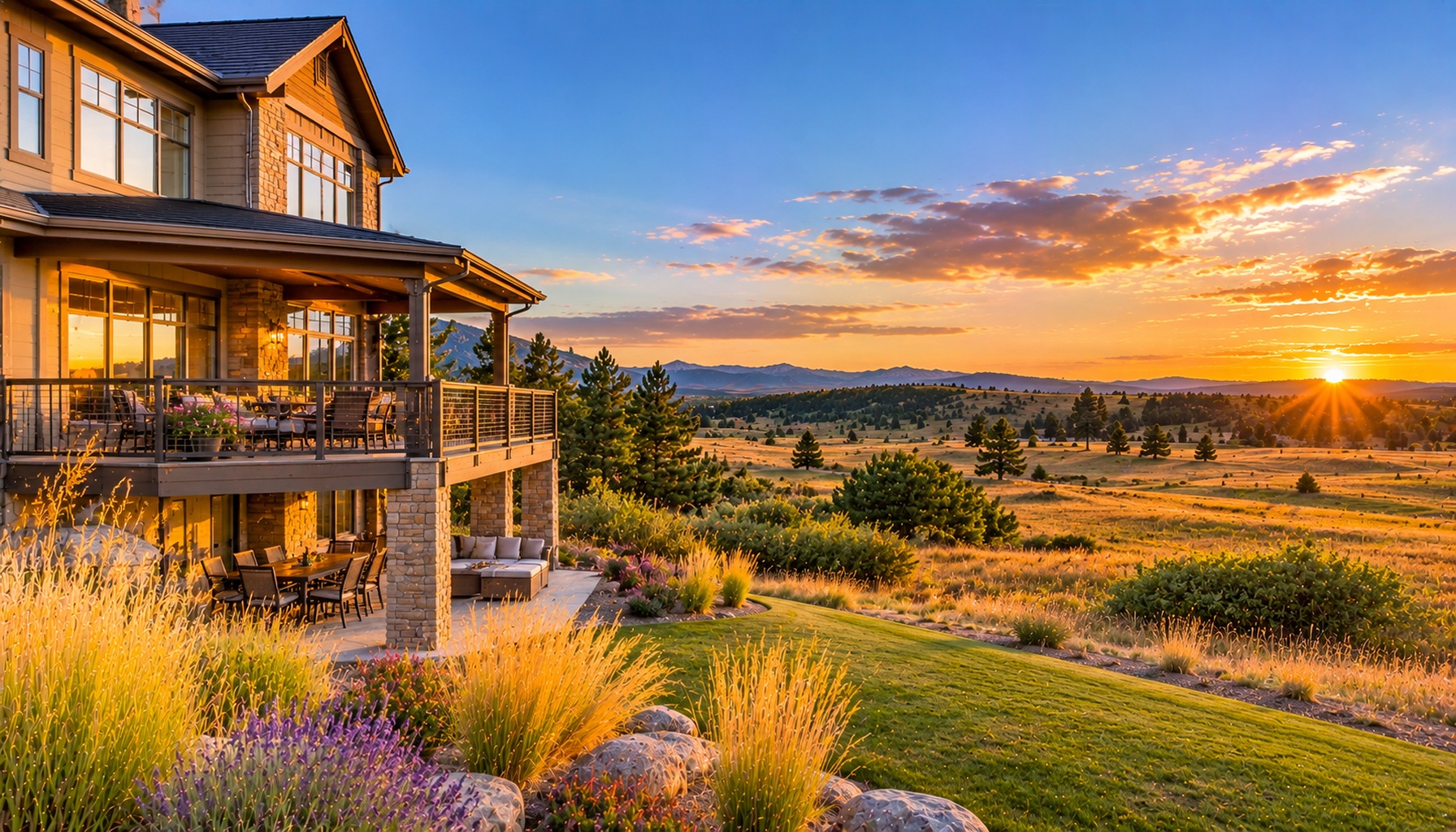
What to Check When a Home Backs to Open Space in Castle Rock
What should you check before buying a home that backs to open space in Castle Rock, Colorado?
You need to verify who owns and manages the open space, whether it is permanently protected from development, what wildfire risks exist, what wildlife you can expect, and how your HOA governs the boundary between your lot and the natural area behind it.
Why This Matters Right Now in Castle Rock and Douglas County
If you are shopping for homes in Castle Rock or the surrounding Douglas County communities, you have probably noticed how many listings highlight “backs to open space” as a premium feature. And it is a premium, often adding meaningful value to a home. But I have learned over 23 years in Colorado real estate that “open space” is not a one-size-fits-all term.
That peaceful meadow behind a property could be permanently protected parkland managed by the Town of Castle Rock. Or it could be a privately held parcel that a developer plans to subdivide next year. The difference between those two scenarios can affect your home value, your daily quality of life, and your long-term investment.
With Douglas County’s median listing price sitting at $739,900 as of August 2026 (per FRED data), you are making a significant financial commitment. You deserve to know exactly what you are backing up to before you write that offer.
Who Owns and Manages the Open Space Behind the Home
This is the single most important question you should ask, and it is the one buyers most frequently skip. Not all open space is created equal, and the entity that owns the land determines how it will be managed and whether it stays open.
Here are the most common ownership structures you will encounter across Castle Rock, Parker, Highlands Ranch, and Elizabeth:
- Municipal or county government (such as the Town of Castle Rock or Douglas County Open Space). These parcels are typically well maintained and permanently protected.
- Metro districts or special districts (such as the Highlands Ranch Metro District, which manages over 8,000 acres of open space and more than 70 miles of trails). Funding comes from your property taxes.
- HOA-managed common areas. The HOA’s financial health directly impacts maintenance quality. What I always tell my clients is to request the HOA’s reserve study, because if reserves are underfunded, that beautiful natural area can deteriorate quickly.
- State or federal land. Near Monument, for example, homes may back to Pike National Forest. This is permanently protected but managed under federal guidelines that may include controlled burns or timber harvesting.
- Private landowners. This is where it gets tricky, especially in Elbert County. What appears to be wide-open rangeland may actually be a private parcel with no development restrictions whatsoever.
You can verify ownership through Douglas County or Elbert County property records. I always pull the parcel data for my buyers before they fall in love with a view that might not last.
Development Risk and Zoning in Douglas County and Elbert County
So the open space looks gorgeous today. But will it look the same in five years? That depends entirely on how the land is zoned and whether any development protections are in place.
Check the Comprehensive Plan and Zoning Maps
Every municipality along the Front Range has a comprehensive plan that outlines future land use. The Town of Castle Rock’s plan identifies areas designated for permanent open space versus areas slated for future residential or commercial growth. You should request the specific zoning classification for any adjacent parcel.
Conservation Easements Are Your Best Friend
Colorado makes extensive use of conservation easements funded through programs like Great Outdoors Colorado (GOCO). A recorded conservation easement on the land behind your home is the strongest protection available, because it legally prevents future development regardless of who owns the parcel.
Elbert County Deserves Extra Scrutiny
If you are looking at homes for sale in Elizabeth or Elbert County, development pressures are real. Growth from Douglas County has been pushing east, and developers are expected to continue proposing smaller acreages and higher-density housing in the area. That gorgeous 35-acre parcel behind a home in Elizabeth or Kiowa may not carry any permanent protection at all. Having worked with buyers throughout Elbert County since 2002, including experience with buying acreage in Elbert County, I can tell you this is one of the most common surprises buyers face in this market.
Wildfire Risk Along Colorado’s Front Range
You cannot talk about homes backing to open space in our part of Colorado without addressing wildfire. The Front Range’s Wildland-Urban Interface (WUI) zones are extensive, and they directly impact communities from Monument through Castle Rock, the Black Forest area north of Colorado Springs, and the forested pockets of Elbert County.
Here is what you need to investigate:
- Check the Colorado State Forest Service wildfire risk maps for the specific property address. A home backing to native grasses, scrub oak, or ponderosa pine carries elevated risk.
- Ask about defensible space requirements. Many Castle Rock and Douglas County HOAs require homeowners to maintain specific vegetation clearances along open-space boundaries.
- Investigate insurance availability and cost. This is a big one. Some insurers have pulled back from high-risk areas along the Colorado Front Range. If you assume your current carrier will cover you, you may be in for a surprise at closing. What I tell my clients is to get an insurance quote before you go under contract, not after.
- Evaluate the community’s fire mitigation history. Well-managed open space districts will have documented mitigation plans, including controlled grazing, fuel reduction, and firebreak maintenance.
Wildlife, Pests, and Practical Lifestyle Considerations
That open space behind your future Castle Rock home is going to bring some neighbors who do not pay property taxes. Depending on the location, you can expect encounters with deer, elk, coyotes, rattlesnakes, prairie dogs, and occasionally mountain lions.
Prairie Dogs Deserve Special Attention
Prairie dog colonies on adjacent open space can undermine foundations, damage landscaping, and create tripping hazards. Douglas County and several HOAs have active prairie dog management programs, but the approach varies widely. Ask your agent (or better yet, have your agent ask) whether the adjacent open space has an active management plan.
Fencing and Pet Safety
If you have dogs, cats, horses, or livestock, you need to understand exactly what fencing is permitted along the open-space boundary. Many HOAs restrict fence heights, materials, and even placement relative to the property line. In communities like those I serve in Elizabeth, where properties often include horse pasture and agricultural designations, the fencing rules can be particularly nuanced.
Noise and Recreational Use
Open-space trails can bring foot traffic, mountain bikers, and even equestrian users directly behind your backyard. Some buyers love this. Others find the weekend foot traffic more than they bargained for. Walk the trail system behind the property at different times of day, including weekends, before you commit.
How Open Space Affects Your Home Value in Castle Rock
Backing to protected open space generally adds a premium to home value, but the amount depends on several factors. With 138 closed transactions across this market and rated 5 out of 5 stars by 118 past clients, I have seen the full spectrum of how open-space lots perform at resale.
The key factors that determine whether backing to open space is a true value-add:
- Permanent protection status. Homes backed by permanently protected open space (conservation easements, municipal parkland) hold their premium best.
- Quality of the view. A sweeping view of Castle Rock’s ridgelines or the meadows along Philip S. Miller Park creates a different premium than backing to a flat, scrubby lot.
- Maintenance standards. Well-maintained open space with groomed trails, managed vegetation, and clean sight lines adds value. Neglected open space can actually detract from it.
- Privacy vs. trail proximity. Homes with open-space views but no trail directly behind them tend to command the highest premiums because you get the view without the foot traffic.
Douglas County’s market is currently classified as a Balanced Market with an Alpha Score of 42 out of 100 as of August 2026, and forecasts project home prices to rise about 2.0% over the next 12 months. In this environment, open-space lots remain one of the strongest differentiators for buyers comparing similar properties.
Frequently Asked Questions
Does backing to open space increase home value in Castle Rock?
Yes, in most cases. Permanently protected open space with mountain views or trail access consistently adds a premium. However, the premium depends on the type of protection, the quality of the view, and how well the open space is maintained. Unprotected land that could be developed may not carry the same premium, so verifying the protection status is essential before you assume value.
Who maintains open space in Douglas County communities?
It varies by community. In Highlands Ranch, the Metro District manages over 8,000 acres of open space and more than 70 miles of trails. In Castle Rock, the town manages significant parkland and trail systems. In HOA-governed communities, the homeowners association handles common areas. Always ask for the specific management entity during your due diligence period.
Can open space behind my Castle Rock home be developed later?
It depends entirely on the ownership and protection status. Municipally owned open space and land under conservation easements are permanently protected. However, privately owned land with no recorded easement can be rezoned and developed. This is especially important in Elbert County, where growth pressures are increasing. Always verify the zoning classification and any recorded easements before closing.
How do I check wildfire risk for a home near open space?
The Colorado State Forest Service publishes wildfire risk maps that you can search by address. You should also check whether the property falls within a designated Wildland-Urban Interface zone, ask about the community’s fire mitigation plans, and get a homeowner’s insurance quote early in the process to confirm coverage availability and cost.
What wildlife should I expect near open-space homes in Castle Rock?
Deer, elk, coyotes, rattlesnakes, and prairie dogs are common throughout Douglas County and Elbert County. Mountain lions and bears are occasionally spotted near Monument and in forested areas. Prairie dog colonies are particularly noteworthy because they can damage landscaping and undermine foundations on adjacent properties.
Are there fencing restrictions on open-space lots in Castle Rock?
Most HOAs and metro districts regulate fencing along open-space boundaries, including restrictions on height, materials, and setback from the property line. If you have horses, livestock, or large dogs, you need to review the specific covenants before purchase. Restrictions can vary significantly even between neighborhoods within the same town.
How do I find out if open space has a conservation easement?
Conservation easements are recorded with the county clerk and recorder’s office. Your real estate agent can pull this information during the due diligence period. You can also search Colorado’s conservation easement databases through the Colorado Department of Revenue or Great Outdoors Colorado (GOCO).
Does open space behind my home affect my homeowner’s insurance?
It can, especially if the open space includes native grasses, scrub oak, or ponderosa pine that elevate wildfire risk. Some insurers have restricted coverage in high-risk WUI zones along the Front Range. I always recommend getting an insurance quote before going under contract so there are no surprises.
What is the difference between open space and undeveloped land in Elbert County?
This is a critical distinction. Open space that is permanently protected (through municipal ownership, metro district management, or conservation easements) will remain undeveloped. Undeveloped land that is privately owned may look identical but carries no protection. In Elbert County, where developers are increasingly proposing new subdivisions, this difference can reshape your neighborhood within a few years.
Should I hire a specialist agent for open-space properties in Douglas County?
Absolutely. Open-space lots involve layers of due diligence that standard suburban transactions do not, including ownership verification, zoning review, conservation easement research, wildfire risk assessment, wildlife management inquiries, and HOA covenant review for boundary rules. Working with an agent who has deep local knowledge of these communities makes a measurable difference in the outcome.
The Bottom Line
Buying a home that backs to open space in Castle Rock, Elizabeth, Parker, or anywhere along Colorado’s Front Range can be one of the best decisions you make, but only when you do the homework first. Verify ownership, confirm permanent protection, assess wildfire risk, understand the wildlife realities, and review your HOA’s boundary rules before you fall in love with the view.
As someone who has spent 23 years working in real estate across Douglas County and Elbert County, and as a top 5% producer who lives on acreage in Elizabeth, I bring the kind of on-the-ground expertise that makes the difference between a smart purchase and an expensive surprise. If you are exploring homes for sale in Elizabeth, Castle Rock, Parker, or anywhere in Elbert County and Douglas County, I would love to help you navigate the details. Reach out to me, Marjorie Engle, at 303-881-2707 or visit Engle Homes Group with eXp Realty to get started.