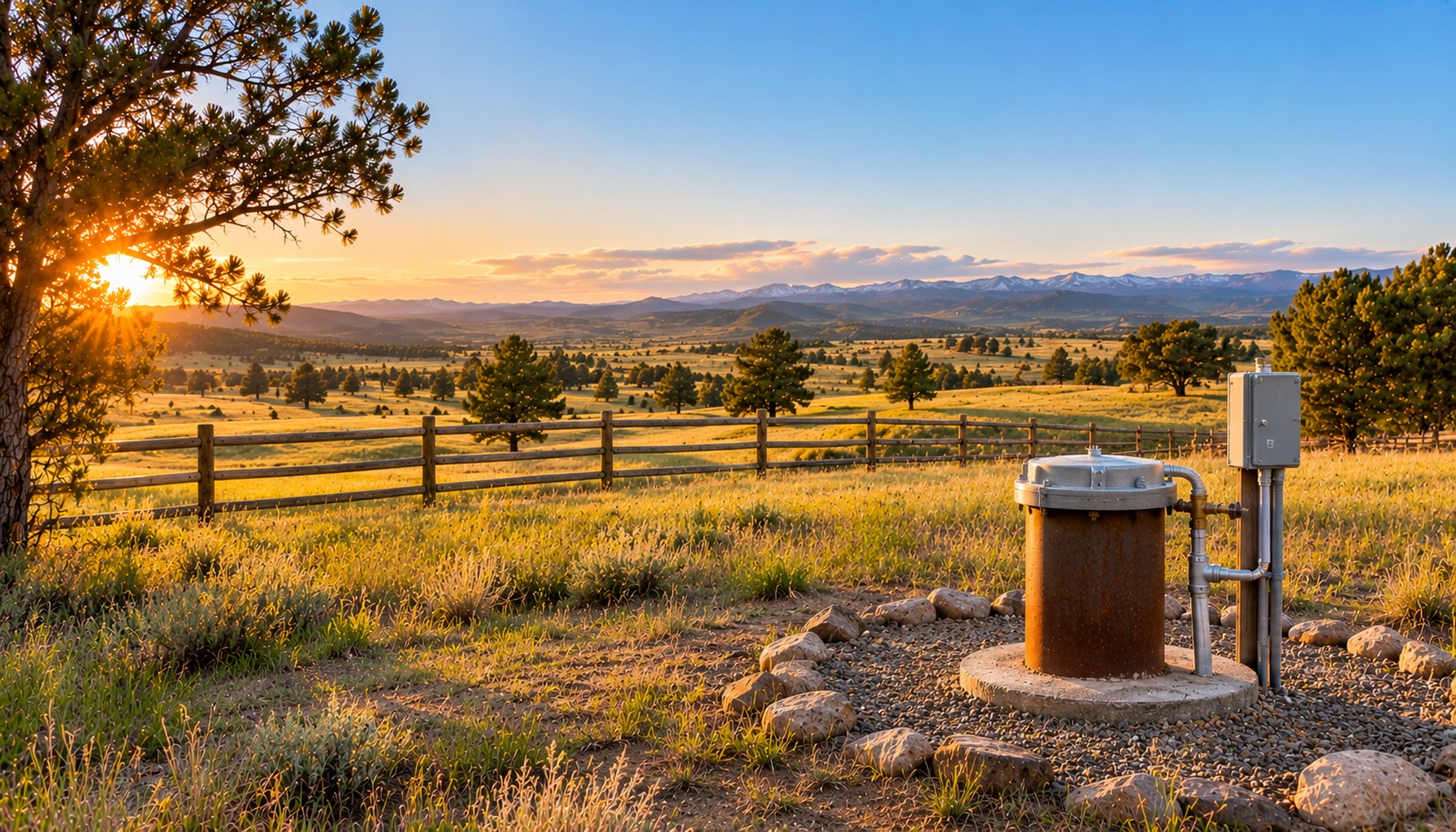
Buying Land With an Existing Well in Elbert County: Questions to Ask Before You Close
What questions should you ask before buying land with an existing well in Elbert County, Colorado?
Before you buy acreage with an existing well in Elbert County, you need to verify the well permit type, confirm legal water uses, review production history, test water quality, and ensure the permit supports your plans for horses, livestock, or irrigation.
Why This Matters Right Now for Elbert County Land Buyers
If you’re looking at homes for sale in Elbert County or raw acreage near Elizabeth, Kiowa, or Franktown, water is the single most consequential part of your due diligence. It’s not an afterthought; it’s the foundation of every decision you’ll make on that property.
Colorado follows the prior appropriation doctrine, which means water rights are allocated by seniority. New wells are often restricted in over-appropriated basins. Buying a parcel that already has a functioning well feels like a win, and it often is. But “functioning” and “legally permitted for your intended use” are two very different things.
As of January 1, 2026, newly adopted rules from the Board of Examiners of Water Construction and Pump Installation Contractors went into effect, per the Colorado Division of Water Resources. These updated regulations (2 CCR 402-2) include new well construction and yield reporting requirements. If you’re purchasing a property with an existing well, you need to know whether that well meets current standards.
With 23 years in Colorado real estate and deep specialization in wells and septic, water rights, and horse properties, I can tell you that this is where acreage buyers most often underestimate risk. Let me walk you through every question you should be asking.
Verify the Well Permit Before You Make an Offer in Elbert County
This is question number one, and it’s non-negotiable. Does the well have a valid well permit from the Colorado Division of Water Resources?
Here’s what you need to know. Any production well used for residential or livestock watering purposes that was constructed after May 8, 1972 should have a permit file on record. Wells put to use before that date may or may not be registered. The Division of Water Resources maintains all well permit files, and you can look them up using the permit number or the section, township, and range location of the well.
What I tell my clients is this: ask for the Colorado well permit before making an offer. Do not rely on what the seller tells you the well “can do.” Verify what the permit actually authorizes.
The Permit Type Changes Everything for Horse Property Buyers
Not all well permits are created equal. There’s a critical distinction between “Household Use Only” permits and “Domestic and Livestock” permits. If you’re buying acreage near Elizabeth or Kiowa with plans to keep horses, you absolutely must confirm the permit allows livestock watering.
One of the biggest mistakes buyers make is assuming that because the current owner has horses on the property, the well permit allows that use. That is not always true. The current owner may simply be using more water than their permit legally authorizes. Before buying acreage, verify what the permit actually says, not just how the property is currently being used.
Even if the well produces sufficient volume, if the permit restricts use to indoor household purposes only, you could face legal issues watering livestock on a parcel under 35 acres.
Check the Well’s Production History and System Performance
When you’re looking at land in Elbert County, where the median price per acre is roughly $7,281 per recent land listing data, the well is a significant portion of the property’s value. You need to understand its full story.
The first question most buyers ask is “How many gallons per minute does it produce?” That’s a fair starting point, but it’s rarely the most important answer. Many Colorado homes operate comfortably with modest production rates when paired with properly sized storage tanks and designed for efficient water use. Conversely, a well with impressive numbers may still need water treatment, maintenance, or equipment upgrades.
Here are the specific questions to ask:
- What is the well depth?
- What was the gallons-per-minute rate when it was originally drilled?
- When was the last pump test performed, and what were the results?
- How old is the current pump?
- Are there maintenance records available?
- Which aquifer supplies this well?
- Is a cistern or storage tank part of the system?
Pull the Well Permit and Well Log from the Colorado DWR database. This document trail provides historical production data, including the original depth and GPM recorded at the time of drilling. A better question than “How many GPM?” is whether the entire system can reliably support the way you intend to live.
Test the Water Quality Before Closing on Elbert County Land
You should never close on a property with a well without testing the water. Prior to purchasing, consider having the well water tested by a state-certified laboratory. The Water Quality Control Division of the Colorado Department of Public Health and Environment can provide a listing of certified labs in Colorado and can be reached at 303-692-3500. The Division of Water Resources does not perform water quality testing.
Some counties can perform a bacteriological/coliform test for water potability. What I always recommend to buyers looking at homes for sale in Elizabeth or Kiowa is that you go beyond the basic coliform test. Ask about mineral content, pH levels, and any known contamination concerns in the area.
Here’s a practical step many buyers skip: try talking to neighboring property owners who are on well water. Ask them about their water quality, their well depths, and their experiences. Compare their feedback to what you’re seeing on the property you’re evaluating. Neighbors along Singing Hills Road, CR 17, or out toward the Kiowa corridor can be a goldmine of local knowledge.
Conduct a Physical Inspection of the Wellhead and Property
Your on-site inspection should cover more than just turning on the faucet. According to the Colorado Division of Water Resources, your visual inspection should address these specifics:
- Is the well physically located on the property? (Not all wells serving a parcel are actually on that parcel.)
- Does the wellhead location allow easy access for repair and maintenance?
- Is the well casing visibly sticking up above the ground surface?
- Is there a weather-tight seal on top of the casing?
- Does the visible casing appear to be steel?
- Is the ground surface around the wellhead sloped so surface drainage moves away from it?
- How far is the wellhead from the septic tank and leach field? (The general requirement is 100 feet from contamination sources and a minimum of 50 feet from septic tanks, sewer lines, or waste vessels.)
- Are there any abandoned, unplugged wells on the property?
Having closed over 138 transactions in this market with a specialization in wells and septic, I can tell you that these physical details matter enormously. A well that looks neglected on the surface often tells a larger story about deferred maintenance.
Understand the Legal Restrictions on Water Use in Elbert County
Water uses in Colorado are restricted by state statutes, well permit conditions, county regulations, and subdivision covenants. This layered system catches many buyers off guard.
Junior Rights and Augmentation Plans
Most domestic wells in Elbert County are considered “junior” rights. This means they could be subject to curtailment during severe droughts unless they are part of a court-approved augmentation plan. You need to ask: are there subdivision restrictions or augmentation requirements attached to this property?
Parcel Size and Use Limitations
Even if a well exists and produces water, on parcels under 35 acres where the well is the only water source, use may be limited to in-house use only. For horse-property buyers looking at 10-acre lots near Elizabeth (where parcels commonly list around $200,000, per recent Elbert County land data), this is a critical consideration.
Professional Review
Water rights do not automatically transfer with the property in every situation. Engaging a water rights attorney for decree review typically costs $1,500 to $4,000, according to industry estimates. That investment can save you from a six-figure mistake.
What About the Cost Savings of Buying With an Existing Well?
Purchasing a property with pre-installed utilities, including a well and septic, can save you roughly $70,000 in development expenses compared to raw land, according to industry estimates. Engineered septic systems alone, often required in the rocky or clay-heavy terrain common throughout Elbert County, can cost between $15,000 and $50,000.
That’s a meaningful advantage. But only if the existing well is permitted correctly, producing reliably, and legally authorized for your intended use. The savings evaporate fast if you need to drill a replacement well or upgrade a system to handle livestock.
Frequently Asked Questions
How do I find the well permit for a property in Elbert County?
You can search the Colorado Division of Water Resources database using the well permit number. If you don’t have the number, you can search by the section, township, and range location of the well or the name of the party that obtained the permit. The DWR maintains all well permit files.
Can I water horses with any well permit in Elbert County?
No. You must have a “Domestic and Livestock” permit to legally water horses. A “Household Use Only” permit restricts water to indoor residential use. Verify the permit type before closing, regardless of how the current owner is using the water.
How old can a well be and still be usable?
There is no hard age limit. The key is production data, maintenance records, and current pump test results. A well-maintained older well can perform reliably for decades. What matters is its current GPM, water quality, and whether it meets current construction standards.
Do I need a new well permit if the existing one has expired?
Per Colorado law, a “valid permit” means one that has not been cancelled and where construction was completed before the expiration date. The State Engineer has exclusive authority to determine whether a permit is valid. If the permit has lapsed, you may need to reapply.
What water quality tests should I request before buying?
At minimum, request a bacteriological/coliform test. Consider additional testing for minerals, pH, and potential contaminants. Use a state-certified laboratory, which you can find through the Colorado Department of Public Health and Environment at 303-692-3500.
How far must a well be from a septic system in Colorado?
General setback requirements include 100 feet from contamination sources and a minimum of 50 feet from septic tanks, sewer lines, or waste vessels, per Colorado well construction standards.
What are the new 2026 well construction rules in Colorado?
Effective January 1, 2026, amended rules require any newly constructed well to file a Well Construction and Yield Estimate Report, including details on well cleaning and development per Well Construction Rule 10.6. These rules were formally adopted on May 29, 2025.
What is well spacing, and will it affect my property?
The State Engineer notifies the owners of all wells located within 600 feet of a proposed well by certified mail. Existing nearby wells can influence permitting decisions for new or replacement wells on your property.
Should I hire a water rights attorney before buying land in Elbert County?
If the property involves complex water rights, augmentation plans, or subdivision covenants, yes. A water rights attorney decree review typically costs $1,500 to $4,000, per industry estimates, and can prevent costly mistakes.
How long does a well permit application take to process?
The State Engineer must act on a Well Permit Application within 45 days of receipt, per Colorado statute.
The Bottom Line
Buying land with an existing well in Elbert County can save you significant money and time, but only if you ask the right questions before closing. Verify the permit, confirm legal uses, test the water, inspect the wellhead, and understand any restrictions that come with the property.
With 23 years serving Elizabeth, Kiowa, Franktown, and the surrounding Elbert County and Douglas County communities, and rated 5 out of 5 stars across 118 client reviews, I work with acreage and horse-property buyers through this process every day. If you’re exploring homes for sale in Elizabeth, searching for real estate services in Elbert County, or evaluating land with a well, I’d love to walk the property with you and make sure you’re protected. Call me, Marjorie Engle with Engle Homes Group at eXp Realty, at 303-881-2707.