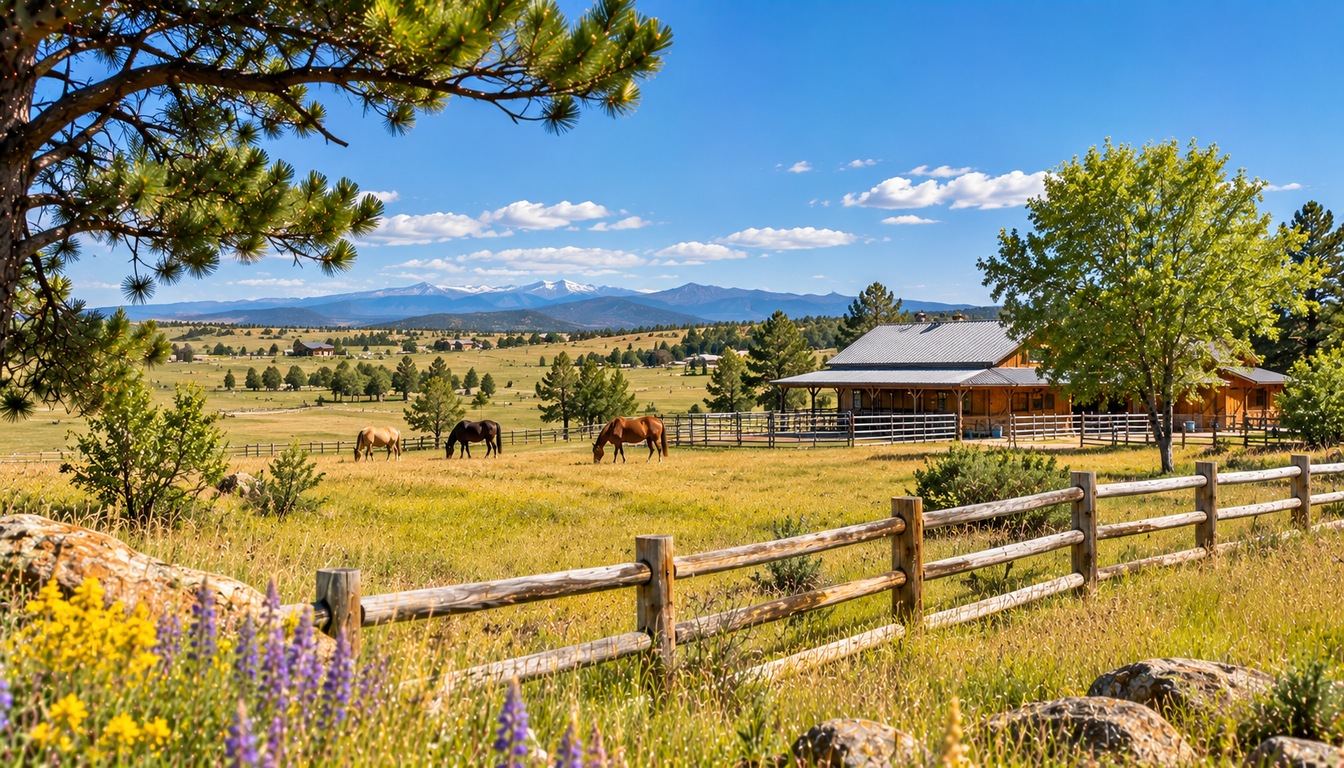
Buying a Home With a Shared Well in Elbert County, Colorado
What do you need to know before buying a home with a shared well in Elbert County, Colorado?
You need a recorded shared well agreement, verified well permit documents from the Colorado Division of Water Resources, and confirmation that the permit covers every use you intend, especially if you plan to keep horses or livestock on your property.
Why Shared Wells Matter Right Now in Elbert County
If you are shopping for acreage, horse property, or land in Elizabeth, Kiowa, Elbert, or Franktown, there is a very good chance you will encounter a shared well. Most homes outside the town cores in Elbert County are on well and septic, and many of those wells serve more than one property.
What makes this especially important in 2026 is that amended Rules and Regulations for Water Well Construction took effect on January 1, 2026, according to the Colorado Ground Water Association. On top of that, House Bill 25-1014 changed how well permit expirations work for non-exempt and large capacity permits. The regulatory landscape has shifted, and buyers who assume “a well is a well” are the ones who end up with problems six months after closing.
I have worked in Colorado real estate since 2002. With 23 years of experience and a specialty in wells and septic, water rights, and acreage properties, I can tell you that shared well issues are one of the top reasons I see deals slow down or fall apart in rural Elbert County. The good news is that every one of those problems is avoidable if you know what to look for before you write an offer.
How Colorado’s Shared Well Rules Actually Work in Elizabeth and Kiowa
Colorado’s Division of Water Resources published Guideline 2023-1, amended August 18, 2025, which is the authoritative document governing shared well use. Here is what you need to understand as a buyer.
The Total Use Rule
If a well permit is used to supply water to a parcel other than where the well is located, or if use of the well is shared between two or more parcels, the total use of water cannot exceed the uses and amounts allowed by the well permit, per DWR Guideline 2023-1. That means two families drawing from the same well do not each get the full permitted amount. You split it.
The Pipeline Requirement
All water must be supplied to shared properties by pipeline, unless the water use is for watering livestock on a farm or ranch, according to DWR Guideline 2023-1. This matters if you are looking at a property near Singing Hills Road or along the rural corridors south of Kiowa, where pipeline infrastructure between parcels varies widely.
The Enforcement Gap You Cannot Ignore
Here is the part that catches people off guard. DWR does not enforce, administer, or resolve issues concerning well sharing agreements, per DWR Guideline 2023-1. The state recommends you have an agreement, but if your neighbor stops paying their share of pump repairs or starts running water 24 hours a day for a new irrigation project, the state will not step in. Your only recourse is the agreement itself and, if necessary, civil court.
So what does that mean for you practically? It means the quality of that shared well agreement is everything. I tell my clients to treat it the same way they would treat HOA covenants: read every word, understand every obligation, and get it recorded with the county.
Three Documents You Must Verify Before Closing on Elbert County Acreage
When you find that perfect 10 to 35 acre parcel outside Elizabeth or along Highway 86 near Kiowa, verifying the well before buying acreage in Elbert County is not optional. Colorado’s Division of Water Resources maintains a searchable online database. No login is required, and the most accurate lookup uses the permit number or receipt number (address searches are often unreliable, per DWR).
Here are the three critical documents:
- The Permit Application confirms what was requested: domestic use, stock water, irrigation, or some combination. Check that the “Proposed Use” matches how you intend to use the property. If you plan to bring horses, this step is non-negotiable.
- The Well Construction and Test Report is proof the well was actually drilled and reported by the driller. It typically includes depth, casing information, static water level, and test yield in gallons per minute at drilling time. If this document is missing, the well may not be legally constructed, per DWR.
- The Pump Installation Report confirms the pump was installed and the system was put into beneficial use.
Red flags to watch for: a permit exists but no construction report, which suggests the well may not have been drilled or reported properly; or an expired permit presented as an “existing well,” which could require a new permit under stricter current standards, per DWR guidance.
Having closed over 138 transactions and with 118 five-star reviews from past clients, I have seen both of these scenarios play out in Elbert County. They are more common than most buyers expect.
The Horse Property Trap: When Your Well Permit Does Not Cover Livestock
This is where I see the biggest disconnect in our market. You are looking at homes for sale in Elbert County, you find a beautiful property with a barn, fenced pastures, and a listing description that says “perfect for horses.” You assume the well handles livestock water. That assumption can cost you.
According to DWR Guideline 2023-1, use of wells permitted for livestock watering is limited to serving livestock owned by the well owner on land owned or leased by the well owner, or watering livestock owned by others grazing on land owned by the well owner under a grazing agreement. A “household use only” permit does not cover horses. Period.
Here is the nuance that matters. If the well permit was issued prior to July 1, 2001, and was not issued pursuant to a subdivision water supply plan letter, watering your own domestic animals and poultry is an allowed use, per DWR. If that use is not specifically listed on the permit, you can submit a written request to DWR to amend the permit at no cost. But you must do this before you start using the water for livestock.
The 35-Acre Threshold
Parcel size also plays a role. Exempt well permits issued on parcels less than 35 acres that are not on cluster development lots are limited to ordinary household purposes inside one single-family dwelling, with no allowed outdoor uses, per DWR. For buyers searching for homes for sale in Elizabeth or looking at new build homes in Elizabeth on subdivided acreage, this restriction is critical. Only one exempt well permit for production purposes may be issued per legal parcel or tract of 35 acres or more.
The 10 to 35 acre segment is the most competitive in both Elbert and Douglas counties right now. If you are shopping in that range, well permit verification is not just advisable; it is essential to protecting your investment.
What a Strong Shared Well Agreement Looks Like in Elbert County
Since the state will not enforce your shared well agreement, the agreement itself needs to do all the heavy lifting. Here is what I recommend you look for, or negotiate into, any shared well arrangement:
- Cost allocation for maintenance and repairs, including pump replacement, which can run several thousand dollars
- Water usage limits per household, tied to the permitted amounts on the well permit
- Access rights specifying when and how each party can access the wellhead for maintenance
- Dispute resolution procedures, ideally including mediation before litigation
- Termination provisions outlining what happens if one party sells their parcel
- Insurance obligations for each party
Your lender will likely require a recorded shared well agreement before approving financing. If the property you are considering does not have one, that is not necessarily a dealbreaker, but it does mean you will need to work with a knowledgeable agent and a real estate attorney to get one drafted and recorded before closing.
2026 Regulatory Changes Every Elbert County Buyer Should Know
Several changes affect well owners and buyers right now:
- Amended construction rules effective January 1, 2026, adopted by the Board of Examiners, updated standards for well construction, pump installation, and cistern installation, per the Colorado Ground Water Association.
- HB 25-1014 automatically extended expiration dates for all valid non-exempt and large capacity well permits to two years from the date of permit issuance.
- Pump installation evidence is no longer required to keep a non-exempt or large capacity well permit from expiring. However, if evidence of well construction has not been provided within two years from the date of permit issuance, the permit will expire, per the Colorado Ground Water Association.
- Licensing rule amendments were adopted on October 6, 2026, by the Board of Examiners of Water Well and Ground Heat Exchanger, per the Colorado Ground Water Association.
These changes affect both existing shared wells and any new wells being permitted. If you are considering new build homes in Elizabeth that will be served by a shared well, make sure the builder’s well permit timeline complies with the updated two-year construction requirement.
Frequently Asked Questions
Does the state of Colorado enforce shared well agreements?
No. According to DWR Guideline 2023-1 (amended August 18, 2025), DWR does not enforce, administer, or resolve issues concerning well sharing agreements. The agreements may be added to a well permit file for informational purposes, but any disputes between well-sharing parties must be resolved privately or through civil court. This is why the quality of your agreement matters so much.
Can I water horses with an exempt well in Elbert County?
It depends on your permit. If the permit was issued before July 1, 2001 and was not part of a subdivision water supply plan, watering your own domestic animals is generally an allowed use, per DWR. If it is not listed on the permit, you can request a free amendment from DWR. Permits issued after that date may not include livestock watering.
What does a shared well agreement cost to create?
The well permit application filing fee is $100, per DWR Form GWS-44. However, drafting a shared well agreement typically requires a real estate attorney, and legal fees vary. Budget for attorney costs separately from permit fees. A replacement or deepening application in the same aquifer costs $60, per DWR.
How do I look up well permits in Colorado?
Colorado’s Division of Water Resources maintains a searchable online database. No login is required. The most accurate search uses the permit number or receipt number, as address-based searches are often unreliable, per DWR.
What happens if the well runs dry on a shared well?
Your shared well agreement should outline cost-sharing for deepening or replacing the well. Without an agreement, you may have no legal mechanism to compel the other party to share costs. A replacement well permit application costs $60, per DWR.
Can I get a USDA loan on a property with a shared well?
USDA loans can work on properties with shared wells, and much of Elbert County qualifies for USDA geographic eligibility. However, the lender will typically require a recorded shared well agreement and satisfactory water quality testing before approving the loan.
What is the 35-acre rule for exempt wells?
Exempt well permits on parcels less than 35 acres (not on cluster development lots) are limited to ordinary household purposes inside one single-family dwelling with no allowed outdoor uses, per DWR Guideline 2023-1. This restriction directly impacts buyers looking at smaller acreage parcels.
Do I need a water test on a shared well before buying?
While not always legally required, lenders typically mandate water quality testing. I recommend both a water quality test and a flow rate test for any shared well property, especially if you plan to keep livestock.
What changed about well permits in 2026?
Amended construction rules took effect January 1, 2026. HB 25-1014 extended non-exempt permit expiration dates to two years. Evidence of pump installation is no longer required to prevent permit expiration, but well construction evidence must be provided within two years, per the Colorado Ground Water Association.
How do I find a top realtor in Elbert County who understands wells?
Look for an agent with specific experience in wells and septic, water rights, and acreage transactions. Rated 5 out of 5 stars by 118 past clients, Marjorie Engle with Engle Homes Group at eXp Realty has specialized in these property types across Elbert County since 2002.
The Bottom Line
Buying a home with a shared well in Elbert County is not a reason to walk away from a property. It is a reason to walk in prepared. You need to verify the well permit, confirm permitted uses match your plans (especially for horses and livestock), review or negotiate a strong shared well agreement, and understand that the state will not step in if something goes wrong between you and the other parties on the well.
With 23 years in this market, I have helped buyers navigate shared wells on everything from 5-acre parcels near Elizabeth to large ranch properties outside Kiowa. If you are searching for homes for sale in Elizabeth, horse property in Elbert County, or land anywhere in the surrounding area, I would love to walk you through the well verification process before you make an offer. Contact Engle Homes Group at 303-881-2707 to get started.