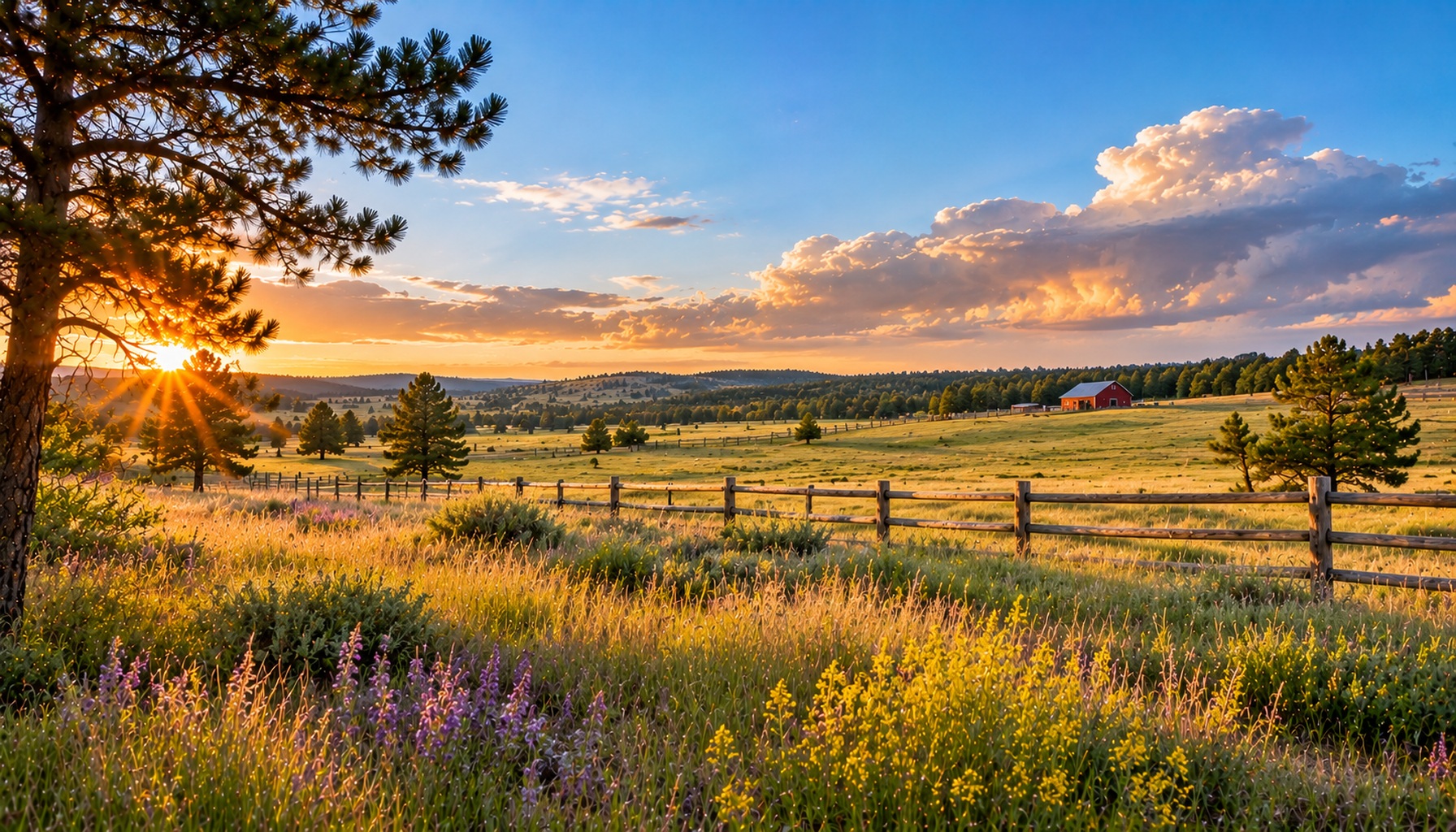
What Agricultural Zoning Means for Buyers and Sellers in Elbert County
What does agricultural zoning mean if you’re buying or selling property in Elbert County, Colorado?
Agricultural zoning in Elbert County designates land primarily for farming, ranching, and livestock uses, with specific rules governing lot size, permitted activities, building setbacks, and your ability to subdivide, all of which directly affect your property’s value and what you can do with it.
Why Agricultural Zoning in Elbert County Matters Right Now
If you’re searching for homes for sale in Elbert County or looking at acreage near Elizabeth, Kiowa, or Franktown, understanding agricultural zoning is not optional. It is the single most important factor that determines what you can build, how many animals you can keep, whether you can subdivide, and how your property taxes are calculated.
Here’s what makes this especially timely: in June 2026, Elbert County planning commissioners agreed on provisional acreage ranges for the updated comprehensive plan, placing agriculture and rural preservation at 35 acres and above, according to county planning session records. Staff is currently turning those ranges into map edits and draft language for public review. That means the rules governing agricultural land in Elbert County are actively being refined, and what you learn today could shape a decision worth hundreds of thousands of dollars.
With 23 years in Colorado real estate and deep roots right here in Elizabeth, I work with buyers and sellers navigating agricultural zoning questions constantly. Let me walk you through what you actually need to know.
Understanding Elbert County’s Agricultural Zone Districts
Elbert County uses several agricultural-context zone districts, and each one carries different implications for your property rights. According to the Elbert County Zoning Regulations, the primary classifications include:
- A (Agricultural): The core agricultural district, designed for farming, ranching, and large-acreage operations
- A-2: A secondary agricultural classification with similar permitted uses
- AR (Agricultural Residential): A hybrid district that blends agricultural and residential uses
- RA (Residential Agriculture), RA-1, and RA-2: Additional districts with varying levels of agricultural and residential integration
Why does this matter to you? Because the zone district printed on your property’s plat determines everything from whether you can raise livestock to how close your barn can sit to the property line. When buyers from Parker, Castle Rock, or Highlands Ranch start exploring Elbert County acreage, the first conversation I have with them is about which zone district the property falls under. It changes the entire picture.
What You Can Do by Right on Agricultural Land
The Elbert County Land Use Table, found in Article V of the zoning code, spells out permitted uses with a clear classification system. In A, A-2, and AR districts, the following are permitted by right (no special approval needed):
- Farming (permitted in A, A-2, AR, and RA)
- Ranching and livestock (permitted in A, A-2, and AR)
- Greenhouses (permitted in A, A-2, AR, RA, and RA-1)
- Hemp production (permitted in A, A-2, and AR)
- Open space and public parks (permitted in all agricultural districts)
Other uses, like campgrounds or golf courses, require a Special Use by Review (SUR), meaning you would need county approval before proceeding.
The 35-Acre Rule and Why It Controls Everything in Elbert County
If there is one number you need to remember when buying or selling agricultural land in Elbert County, it is 35. Colorado Senate Bill 35, passed in 1972, allows landowners to divide property into parcels of at least 35 acres without going through the full subdivision review process. This law has shaped rural Elbert County development for over five decades.
What does that mean practically for you?
- Well permits: You generally need at least 35 acres to secure domestic water well rights with simplified permitting, per established county and state guidelines
- Subdivision flexibility: If you own a 70-acre parcel zoned A, you can typically split it into two 35-acre lots without a lengthy subdivision application
- Grazing capacity: Successful ranchers in Elbert County often follow a stocking rate of 15 to 25 acres per animal unit to maintain sustainable grazing, according to local agricultural guidance
So when you’re driving down County Road 158 east of Elizabeth or exploring parcels along Kiowa Creek near Fiddleback Ranch Road, and you see that a property is “35 acres, A-zoned,” you’re looking at a parcel specifically sized to maximize flexibility under Colorado law.
Setbacks, Building Height, and Dimensional Standards in Elbert County
You found a gorgeous 40-acre parcel outside of Kiowa. You want to build a home, a barn, and maybe a riding arena. Can you put them wherever you want? Not quite.
Elbert County’s dimensional standards, outlined in Article VI of the zoning regulations, establish clear rules:
- Maximum building height: 60 feet
- Minimum front setback: 40 feet
- Side and rear setbacks adjacent to residential or agricultural properties: 60 to 75 feet
These setbacks affect your site plan significantly, especially on narrower parcels or irregular lot shapes. If you’re planning a custom build on agricultural land (one of my specialties with 138 closed transactions across this market), getting a survey and understanding your setback requirements before you close is critical. When exploring buying acreage in Elbert County, I always tell my clients: the time to discover a setback conflict is before you own the land, not after.
Right to Farm Protections and What They Mean for Your Neighbors
This is something many buyers moving from the Denver Metro do not expect. Elbert County is officially a “Right to Farm” county. According to the county’s zoning regulations in Article I, these regulations support the basic right to farm, right to harvest, and right to access roads and highways.
What does that mean for you? If you buy a beautiful 5-acre lot in an AR district next to a working cattle operation, that rancher has legal protection to continue their agricultural activities. Noise from equipment at dawn, dust from haying, odors from livestock. These are not nuisances under the law. They are protected agricultural operations.
This is not a warning to scare you away. It is a reality check that helps you make a better decision. When you understand right-to-farm protections before you buy, you choose your property with open eyes. As one of my past clients put it in a review, Marjorie “made what could have been a very stressful experience feel smooth, supported, and even exciting at times.” That starts with honest education upfront.
Conservation Easements, Solar, and the Future of Elbert County Agricultural Land
Agricultural zoning does not exist in a vacuum. Two additional factors are shaping the landscape for Elbert County property owners in 2026.
Conservation Easements
Some Elbert County ranches carry conservation easements that can lower your property tax burden and protect the land’s legacy. However, these easements often restrict future development or subdivision. If you’re buying a ranch property, I always recommend reviewing easement documents with a land-use attorney before signing anything.
Solar Energy on Agricultural Land
At a July 2026 work session, Elbert County commissioners directed staff to draft regulations that would keep utility-scale solar primarily in agricultural zones, while also considering battery-storage standards, setbacks, fencing, and fire safety, per county commission records. This could create new income opportunities for agricultural landowners, but it also signals evolving regulation that you should monitor.
How Agricultural Zoning Affects Property Values in Elbert County
You might wonder: does agricultural zoning help or hurt property values? The answer is nuanced.
Elbert County’s median home value sits at $709,800, ranking it among the top 10 most expensive counties in Colorado. In Elizabeth specifically, the median closed sale price in the 80107 ZIP was $644,000 over the last six months, based on 252 tracked closed sales with 62 active listings currently on the market.
Properties with agricultural tax classification (defined under Section 39-1-102 of Colorado Revised Statutes) receive significantly lower property tax assessments than residential properties. That tax advantage is a real financial benefit, but it comes with the expectation that the land is being used for agricultural purposes.
The county currently features 277 homes for sale, with an average sale price of $684,410 and an average cost per square foot of $263, per recent Elbert County market data.
Frequently Asked Questions About Agricultural Zoning in Elbert County
What zone districts are considered agricultural in Elbert County?
The primary agricultural districts are A (Agricultural), A-2, and AR (Agricultural Residential). Additional hybrid districts include RA, RA-1, and RA-2. Each carries different permitted uses, so you need to check your specific property’s designation through Elbert County Community and Development Services.
Can I raise livestock on agriculturally zoned land in Elbert County?
Yes. Ranching and livestock are permitted by right in A, A-2, and AR districts, according to the Elbert County Land Use Table in Article V. Article XIV of the zoning regulations provides specific rules about the types and numbers of animals permitted by zone district.
What is the 35-acre rule in Elbert County?
Colorado Senate Bill 35, passed in 1972, allows property owners to divide land into parcels of at least 35 acres without going through a full subdivision review. This threshold also typically simplifies domestic well permitting, making it a foundational benchmark for rural property buyers.
How do setback requirements work on agricultural parcels in Elbert County?
Per Article VI of the zoning code, agricultural properties must observe a 40-foot minimum front setback and 60 to 75 feet for side and rear setbacks adjacent to residential or agricultural properties. Maximum building height is 60 feet.
What does Right to Farm mean for Elbert County property buyers?
Elbert County’s zoning regulations officially support the right to farm, right to harvest, and right to access roads and highways. If you buy near an active agricultural operation, that operation has legal protection to continue, even if it produces noise, dust, or odors.
Can I grow hemp on agricultural land in Elbert County?
Yes. Hemp production is permitted by right in A, A-2, and AR districts, per the Elbert County Land Use Table.
Are conservation easements common on Elbert County ranch properties?
Some ranches do carry conservation easements, which can lower property taxes but restrict future development or subdivision. Reviewing easement terms with a land-use attorney before purchasing is strongly recommended.
What is the county doing about solar energy on agricultural land?
In July 2026, Elbert County commissioners directed staff to draft regulations keeping utility-scale solar primarily in agricultural zones while addressing battery storage, setbacks, fencing, and fire safety, per county commission session records.
How does agricultural zoning affect my property taxes in Elbert County?
Properties classified as agricultural land under Colorado Revised Statutes Section 39-1-102 receive significantly lower property tax assessments compared to residential classification. The specific savings depend on your parcel size and use.
Is Elbert County updating its agricultural zoning rules in 2026?
Yes. In June 2026, planning commissioners agreed on provisional acreage ranges for the comprehensive plan update, formally placing agriculture at 35 acres and above. Staff is drafting language for public review, per county planning session records.
The Bottom Line on Agricultural Zoning in Elbert County
Agricultural zoning in Elbert County is not just a line on a map. It dictates what you can build, how you can use your land, what your neighbors are legally allowed to do, and how your property is taxed. With the county actively refining its comprehensive plan in 2026 and exploring solar energy regulations on agricultural parcels, staying informed is essential.
I have been working Colorado real estate since 2002 and live right here in Elizabeth on acreage with my horses and family. With 118 five-star reviews and deep experience in wells, septic, water rights, and ranch properties, I help buyers and sellers navigate exactly these kinds of decisions every week. If you’re looking at homes for sale in Elizabeth, exploring acreage near Kiowa, or considering a new build in Elbert County, call me at 303-881-2707 or visit Engle Homes Group at eXp Realty. Let’s make sure you understand every detail of your land before you sign.