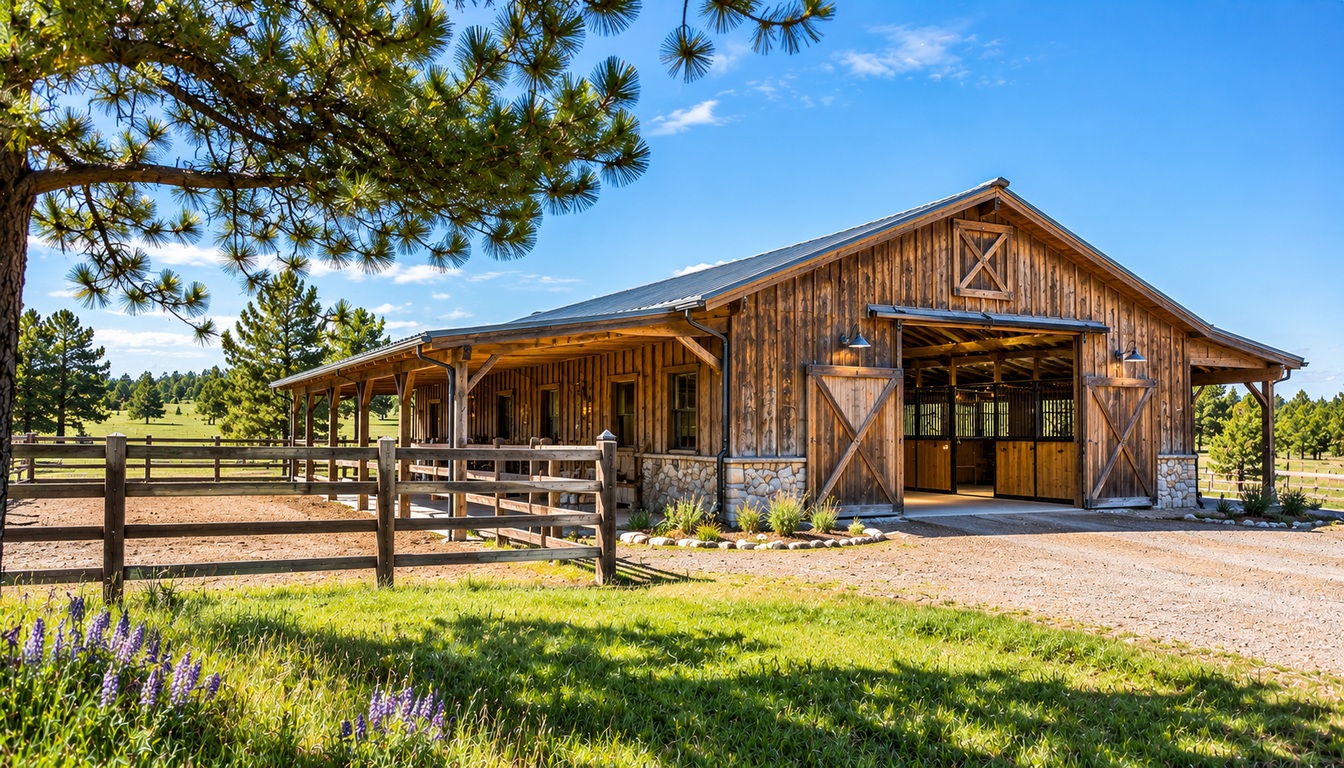
Acreage Home Inspections in Elbert County: What Every Buyer Should Expect
What should you expect from a home inspection when buying acreage or horse property in Elbert County, Colorado?
Buying acreage in Elbert County means your inspection goes far beyond the standard four walls and a roof. You should expect well testing, septic evaluation, outbuilding assessments, and land-specific checks that suburban inspections simply do not cover.
Why Acreage Inspections in Elbert County Matter Right Now
If you are shopping for homes for sale in Elbert County right now, you are entering a market where inventory is tight and the properties themselves are complex. Home prices in the 80106 zip code range from $249,500 to $5,950,000, per recent listing data. That enormous spread reflects the diversity of what “acreage” means out here: a modest home on a few acres near Kiowa is a fundamentally different purchase than a horse property along Milford Road in the town of Elbert.
With 23 years in Colorado real estate, including deep specialization in wells, septic, horse properties, and acreage, I can tell you that the inspection phase is where most acreage transactions either gain momentum or fall apart. One of my past clients put it this way in a review: Marjorie “handled a very difficult inspection situation with the seller. Instead of letting it become stressful or discouraging, she protected our peace, advocated for us, and guided us through every step with calm reassurance.” That is exactly the kind of guidance you need when your inspection report is 40 pages instead of 12.
How Elbert County Acreage Inspections Differ from Suburban Home Inspections
When you buy a home in Parker, Highlands Ranch, or Castle Rock that sits on a quarter-acre lot connected to municipal water and sewer, your general home inspection covers the structure, HVAC, electrical, plumbing, and roof. That is often the only inspection you need.
Step outside those suburban boundaries into unincorporated Elbert County, and your inspection checklist multiplies. Here is what gets added:
- Well water testing: Flow rate, water quality, bacterial contamination, and mineral content
- Septic system evaluation: Tank condition, drain field functionality, and remaining lifespan
- Outbuilding assessment: Barns, loafing sheds, arenas, and detached garages each need structural review
- Fencing and pasture condition: Critical for horse property buyers looking at communities like Spring Valley Ranch, Willownook Ranches, or Coyote Hills in Elizabeth
- Grading, drainage, and erosion: Elbert County’s rolling terrain and clay-heavy soils create unique drainage concerns
- Water rights verification: Particularly on larger parcels where irrigation or stock watering is involved
What does this mean for your budget and timeline? It means you should plan for multiple specialists, not just one general inspector. And you need to build extra days into your inspection window to accommodate their schedules.
Well and Water Testing for Elbert County Acreage Properties
Your well is your lifeline on acreage in Elbert County. There is no municipal backup. If the well underperforms or the water quality is poor, you are facing potentially significant remediation costs before you even move in.
What I tell my clients is to insist on a comprehensive well test that covers both quantity (gallons per minute) and quality (contaminants, hardness, pH, bacteria). A standard well flow test will run the pump for a sustained period to measure recovery rate. In the eastern reaches of the county, near the town of Elbert along Elbert Road and Eagle Drive, well depths can vary dramatically from property to property.
You should also request documentation of the well permit from the Colorado Division of Water Resources. This tells you the legal parameters of your water use, which matters enormously for horse properties where livestock watering demands are real. Water rights are a separate legal question from the physical well, and confusing the two is a mistake I see buyers make regularly.
So what happens if the well test comes back with concerns? You negotiate. Having closed over 138 transactions across Elbert County and Douglas County, I have walked buyers through well negotiations where the seller agreed to fund a water treatment system, and I have also advised buyers to walk away when the well simply could not support the property’s intended use.
Septic System Inspections: What Elbert County Buyers Need to Know
Every acreage property in unincorporated Elbert County runs on a septic system. This is not optional, and it is not something you can skip inspecting.
A proper septic inspection includes pumping the tank (so the inspector can see the interior walls and baffles), evaluating the drain field with a dye test, and checking for signs of system stress. In Elbert County’s soils, which vary from sandy loam in some areas to heavy clay near Kiowa along Highway 86, drain field performance can be heavily influenced by the soil composition.
Key Questions to Ask During Your Septic Inspection
- When was the tank last pumped, and is there a service history?
- What type of system is installed (conventional gravity, pressure distribution, or engineered)?
- Has the drain field ever been replaced or expanded?
- Are there any signs of surface pooling or odor near the leach field?
Replacing a failed septic system in Elbert County can cost tens of thousands of dollars. Getting a qualified septic inspector out during your due diligence period is non-negotiable. If the seller does not have maintenance records, that itself tells you something worth knowing.
Inspecting Barns, Outbuildings, and Equestrian Infrastructure in Elbert County
If you are buying a horse property along Milford Road near the town of Elbert, or in established communities like Elkhorn Ranch or Stage Run in Parker and Elizabeth, the outbuildings may represent a significant portion of the property’s value.
Your general home inspector is not the right person to evaluate a six-stall barn with a tack room and attached arena. You want an inspector (or contractor) with specific experience in agricultural and equestrian structures. They should assess:
- Structural integrity: Post-and-beam construction in older barns may show settling, rot, or pest damage
- Electrical systems in outbuildings: Improperly wired barns are a fire risk, and this is something I have flagged on multiple properties over my career
- Ventilation and drainage: Proper airflow in barns directly impacts livestock health
- Fencing condition: Board fencing, pipe fencing, and wire all have different lifespans and repair costs
- Arena footing and drainage: An indoor or outdoor arena that does not drain properly becomes unusable seasonally
Living on acreage in Elizabeth myself, with horses, dogs, and cats, I understand firsthand that these outbuildings are not just “extras.” They are functional infrastructure. Your inspection needs to treat them that way.
Land-Specific Concerns for Acreage Buyers Near Kiowa, Franktown, and Elizabeth
The land itself is part of the inspection. You are not just buying a house; you are buying topography, soil, access, and legal entitlements. Here is what to evaluate:
- Access and easements: Confirm that your driveway and road access are legally documented. Some properties in rural Elbert County rely on shared access easements that may have unclear maintenance obligations.
- Flood zones and drainage: While Elbert County is generally well-drained high plains, low-lying areas near creek beds can carry flood risk.
- Radon testing: Colorado’s Front Range has elevated radon levels. Radon mitigation is common and relatively affordable, but you need the test first.
- Zoning verification: With the county experiencing growth pressure and ongoing debates about density and subdivision regulations, confirming what you can and cannot do with the land is essential before you close.
With rated 5 out of 5 stars across 118 client reviews, I have earned that trust by catching the details that others miss. One client shared that I was “great at negotiating and fighting for us with some big items that came up in the inspection. I truly didn’t think the transaction was going to go through but she worked her butt off and now I’m living in my dream home.”
Frequently Asked Questions About Acreage Inspections in Elbert County
How long does an acreage inspection take compared to a standard home inspection?
You should plan for significantly more time. A standard suburban inspection runs roughly three to four hours. An acreage property in Elbert County, including the well, septic, outbuildings, and land, may require visits from multiple specialists spread across several days. Build at least seven to ten business days into your inspection period when possible.
Do I need a separate well inspection, or does the general inspector cover it?
You need a separate well inspection. General home inspectors typically note the presence of a well but do not test flow rate, water quality, or bacterial contamination. In Elbert County, hiring a well specialist and a certified water testing lab is standard practice for acreage purchases.
What does a septic inspection cost in Elbert County?
Septic inspection costs vary based on system type and whether pumping is included. You should budget for a standalone septic evaluation in addition to your general home inspection. Your agent can recommend local inspectors who specialize in Elbert County systems and soil conditions.
Can I negotiate repairs based on well or septic inspection findings?
Yes. Well and septic findings are among the most common negotiation points in Elbert County acreage transactions. Depending on severity, you may negotiate a repair credit, seller-funded remediation, or a price reduction. In some cases, walking away is the right call.
Should I test for radon on an Elbert County acreage property?
Absolutely. Colorado’s Front Range has naturally elevated radon levels. Radon testing is inexpensive and typically takes 48 hours. Mitigation systems, if needed, are effective and relatively affordable. Most lenders and inspectors recommend testing regardless of property type.
Are horse barns and arenas included in a standard home inspection?
Generally, no. Standard home inspectors focus on the primary residence. Outbuildings, barns, arenas, and equestrian infrastructure should be evaluated separately by someone experienced with agricultural structures.
What should I look for in fencing during an acreage inspection?
Evaluate fencing type (board, pipe, wire, or electric), condition, post integrity, and whether it meets your intended use. Horse-safe fencing has different requirements than cattle fencing. Replacing perimeter fencing on even five acres represents a meaningful expense.
How do I verify water rights on an Elbert County property?
Water rights are a legal matter, not strictly an inspection item. Your real estate agent and attorney should help you verify water rights through the Colorado Division of Water Resources. Do not assume that owning the well means you own unrestricted water rights.
What if the property has a shared well with a neighbor?
Shared wells exist in parts of Elbert County. You need to review the well-sharing agreement carefully, including maintenance responsibilities, usage limits, and dispute resolution terms. Your inspector should still test the well, but the legal structure is equally important.
Do acreage inspections affect my ability to get financing?
They can. Lenders may require satisfactory well and septic inspections as a condition of financing. The 2026 conforming loan limit in Elbert County is $862,500 for a single-family home, per LoanGraphs data, which helps many buyers avoid jumbo loan requirements. However, lender-required inspections may have specific standards that go beyond what a buyer’s personal inspection covers. Understanding what costs are involved in buying a home will help you prepare for additional inspection-related expenses.
The Bottom Line on Buying Acreage in Elbert County
Buying acreage in Elbert County is one of the most rewarding real estate decisions you can make on Colorado’s Front Range, but it demands a more thorough inspection process than any suburban purchase. Your well, septic, outbuildings, fencing, and the land itself all deserve professional evaluation. Cutting corners here can cost you far more than the inspection fees.
For specific guidance on buying acreage in Elbert County and what to check before you write an offer, I have resources and checklists that walk you through every major category.
As a top realtor in Elbert County and a recognized Top 5% Producer with eXp Realty, I have guided buyers through every type of acreage inspection scenario this county can throw at you. If you are looking at homes for sale in Elizabeth, Kiowa, Franktown, or anywhere across Elbert County and Douglas County, I would love to help you navigate the process with confidence. Reach out to me, Marjorie Engle with Engle Homes Group, at 303-881-2707 to get started.