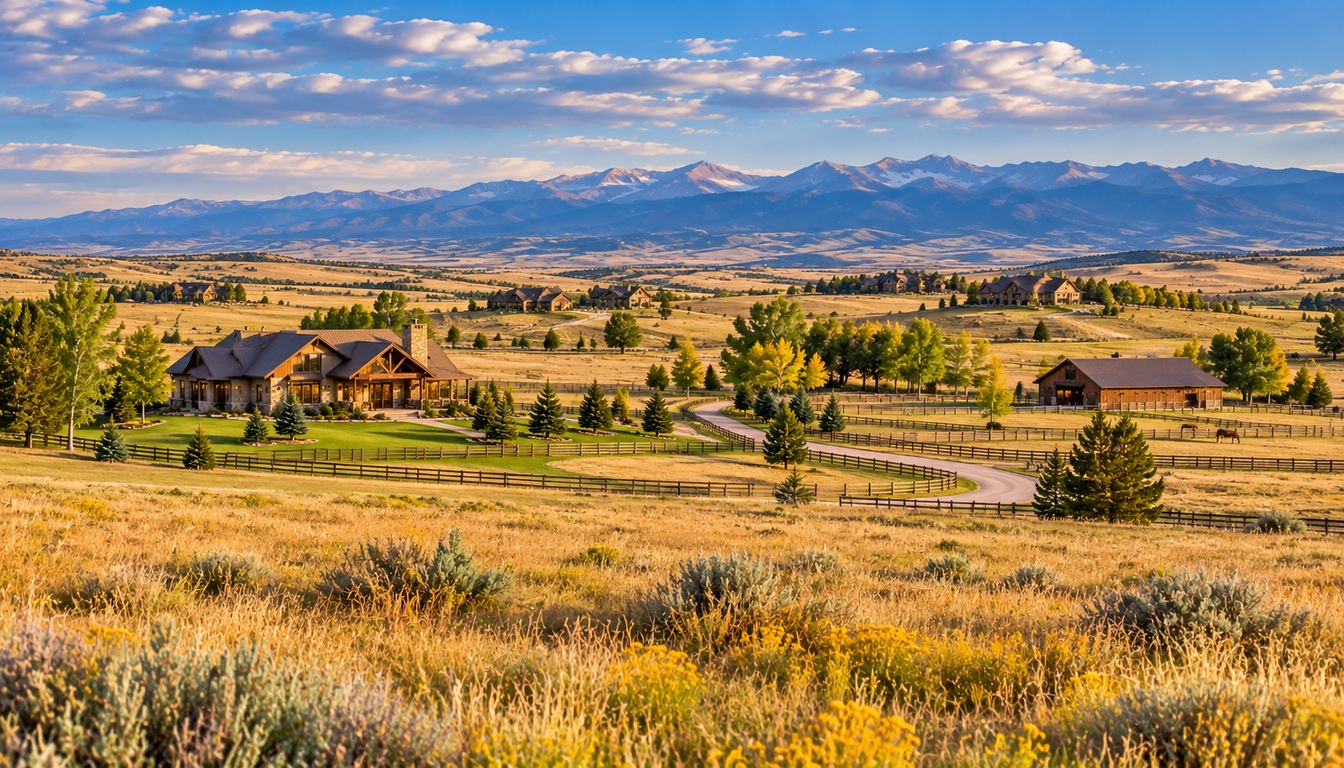
Zoning and Land Use Restrictions for Luxury Ranch Properties in Elbert County
What are the zoning and land use restrictions on luxury ranch properties in Elbert County, CO, in 2026, and how do they affect what you can build or do with the land?
Elbert County’s agricultural zoning districts allow broad ranch uses by right, but building permits, accessory dwelling limits, setback requirements, and the 35-acre parcel threshold directly shape what you can construct on your luxury ranch property.
Why Elbert County Zoning Matters for Ranch Buyers Right Now
If you are considering a luxury ranch purchase in Elbert County, 2026 is a particularly important year to pay attention to the regulatory landscape. The county is in the middle of updating its Comprehensive Plan, with the Planning Commission reviewing the Future Land Use Map from April through September 2026, and a draft plan review scheduled for late October and November 2026, per the Elbert County Comprehensive Plan website.
Here is the critical detail I make sure every one of my ranch-focused clients understands: this Comprehensive Plan update does not directly change zoning. The future land use map will guide future development decisions, but county regulations will not be amended upon plan adoption. That said, it signals where the county sees growth heading, and if you are investing in a multi-million dollar ranch property, you want to be ahead of that curve, not behind it.
With 23 years in this business and deep roots in Elizabeth and Elbert County, I have seen regulatory shifts reshape what buyers can and cannot do with their land. Let me walk you through exactly what you need to know before you write an offer.
The Elbert County Zoning Districts That Apply to Your Ranch Property
Not all agricultural zoning is created equal. Elbert County’s Zoning Regulations (Amendment 5.1) establish multiple zone districts, and each one determines what you can build, how many animals you can keep, and what activities require special review. The regulations apply to all properties within the unincorporated area of Elbert County, per Article I zoning documentation.
The primary districts you will encounter when shopping for ranch land include:
- A (Agricultural): The most permissive district for ranch uses. Animals, agriculture, and single-family dwellings are permitted by right. Private shooting galleries are also permitted by right in A zones, per the county’s Land Use Table (Article V, Amendment 5.1).
- A-2 (Agricultural-2): Similar to A with some additional restrictions, but exotic unregulated animals are still permitted by right.
- AR (Agricultural-Residential): A transitional zone that allows both agricultural and residential uses, though with tighter limitations than pure agricultural zoning.
- RA, RA-1, RA-2 (Residential-Agricultural): Progressively more residential in character. You can still keep livestock, but the balance tilts toward residential use.
What does this mean practically? If you are eyeing a 100-acre parcel near Kiowa versus a 35-acre horse property closer to Elizabeth off County Road 13, the zoning district can determine whether your dream equestrian arena or guest house is a straightforward permit or a months-long special use review. This is exactly the kind of thing I walk my clients through before they even schedule a showing.
What You Can Actually Build on Elbert County Ranch Land
The 35-Acre Threshold You Cannot Ignore
This is one of the most important numbers in Elbert County land development. According to the county’s Community Development Services documentation, parcels of 35 acres or larger can generally proceed directly to building permits without subdivision review. Parcels smaller than 35 acres must undergo subdivision review by CDS and the Planning Commission before any development.
For luxury ranch buyers, this means a 35-acre-plus parcel gives you a significantly more streamlined path to breaking ground. You still need a building permit for any structure, including surface and subsurface construction, per county regulations, but you skip the extra layer of subdivision review that can add months to your timeline.
Setback and Height Requirements
Your building envelope is shaped by Article VI of the Elbert County Zoning Regulations:
- Maximum building height: 60 feet for non-residential and agricultural context structures
- Minimum front setback: 40 feet
- Side and rear setbacks adjacent to residential or agricultural zones: 60 to 75 feet
- Eaves, roof overhangs, and fireplaces may protrude not more than 24 inches into the setback
- Corner lots must meet front yard setback requirements on each side that borders a public or private road
If you are envisioning a grand barn with a 50-foot roofline and an attached indoor arena, these numbers are your guardrails. Plan your site layout early, because on a 35-acre parcel with irregular boundaries, those 60-to-75-foot side setbacks can eat into your usable building area faster than you expect.
Accessory Dwellings, Guest Houses, and the One-Home Rule in Elbert County
This is where I see the most surprises among luxury ranch buyers. You picture a main residence, a guest house for visiting family, and maybe caretaker quarters near the barn. Here is the reality, per Elbert County’s Common Questions documentation:
Most zoning districts allow one single-family dwelling per lot or parcel. The county provides several options for additional accessory dwelling units under specific conditions, but accessory uses and structures must be secondary and incidental to the principal use of the property and located on the same lot.
What I tell my clients is this: “accessory” does not mean “second home.” An illegal dwelling unit, meaning one built or occupied without the necessary land use approvals or a proper building permit, can create serious legal and financial problems. The county also explicitly prohibits converting a single-wide mobile home or similar structure into a storage building.
Before you finalize plans for that guest cottage, you need to verify the specific allowances for your parcel’s zone district. Having closed over 138 transactions in this market, I can tell you this is one of the most common areas where buyers make assumptions that do not hold up under the actual regulations.
Equestrian and Livestock Rules for Elbert County Luxury Ranch Properties
If horses are part of your vision, Elbert County has a clear formula. According to the county’s zoning FAQ documentation, horses for the use of an occupant and their guests are allowed in most residential zoning districts provided the number of horses does not exceed one horse per one-half acre, as outlined in Article XIV Section C of the Elbert County Zoning Regulations.
So on a 35-acre ranch, the zoning formula would permit up to 70 horses. On a sprawling 100-acre property east of Elbert, the math allows for 200. Of course, practical carrying capacity depends on your pasture quality, water access, and how you manage your land, but the zoning itself is generous for equestrian use.
A few additional livestock-related details worth noting:
- Exotic unregulated animals are permitted by right in A and A-2 zones
- Exotic regulated animals require a Special Use by Review (SUR) in A and A-2 zones
- Accessory enclosures (think horse shelters, tack rooms) are permitted as accessory uses in A, A-2, AR, RA, RA-1, and RA-2 zones
- Non-commercial greenhouses are accessory uses in all zones
This is where my background in acreage and horse property really comes into play. I have been specializing in Elizabeth and Elbert County since 2007, and when you are buying a horse property, the difference between what the zoning says you can do and what the land can actually support is a conversation you need to have with someone who knows the terrain, the water table, and the soil conditions out here.
Subdivision, Rezoning, and the Conservation Community Option in Elbert County
Splitting Your Ranch Land
Thinking about buying a large ranch and potentially dividing it in the future? The county’s Subdivision Regulations make one thing clear: at no time shall a plat propose to create remnants of existing parcels that amount to less than 35 acres. That minimum parcel size protects the rural character of Elbert County, but it also limits your flexibility if you are considering a future partial land sale.
Rezoning Activity in 2026
The county is actively processing rezoning requests. In 2026, Resolution 26-02 addressed the Schrag Rezone (RZ-2025-0007), Resolution 26-03 adopted amendments to Article II of the Elbert County Zoning Regulations, and Resolution 26-34 addressed the Freedom Valley Ranch Rezone (Case No RZ-2025-0008), per the county’s recorded ordinances and resolutions. This confirms the county is open to reviewing rezoning applications, though the process involves both Planning Commission review and Board of County Commissioners approval.
Conservation Communities
For buyers with 80 acres or more who want to balance development with land preservation, Elbert County offers a Conservation Community option. The requirements include a minimum parcel size of 80 acres, reserving at least 50% of gross acreage as open space, and open space that preserves significant natural resources like wildlife habitat, migratory corridors, creeks, and wetlands, per the county’s housing section master plan. Farming, hay production, and ranching (excluding feedlots or confined animal feeding operations) are allowed within the reserved open space.
What Happens If You Build Without Proper Approval in Elbert County
The county takes compliance seriously. Zoning Compliance uses a two-pronged approach, per the county’s Code Enforcement documentation: first working with property owners to achieve voluntary compliance, and second pursuing legal action through the court system if violations are not corrected.
Under CRS 30-28-124, constructing, altering, or using a building or land in violation of zoning standards constitutes a misdemeanor. Violators may face fines, imprisonment, or both, and every day of violation is considered a separate offense.
Violation types include unpermitted construction, land use without required permits, illegal outdoor storage, and multiple dwellings. With 118 client reviews at a 5 out of 5 star average, one reason clients trust my guidance is that I help them avoid exactly these kinds of costly missteps before they happen.
Frequently Asked Questions
Can you build more than one house on a ranch parcel in Elbert County?
Most Elbert County zoning districts allow one single-family dwelling per lot or parcel. Additional accessory dwelling units may be possible under specific conditions outlined in the zoning regulations, but they must be secondary and incidental to the principal use. Always verify your specific zone district’s allowances with Community Development Services before designing your site plan.
How many horses can you keep on a luxury ranch in Elbert County?
Per Article XIV Section C of the Elbert County Zoning Regulations, horses for the use of an occupant and guests are allowed provided the count does not exceed one horse per one-half acre. A 35-acre property would allow up to 70 horses under zoning rules, though actual carrying capacity depends on pasture quality and water availability.
Do you need a building permit for a barn or arena in Elbert County?
Yes. It is unlawful to erect, construct, reconstruct, alter, or change the use of any building or structure within unincorporated Elbert County without first obtaining a building permit from the County Building Official, per county regulations. This applies to barns, arenas, and all surface and subsurface structures.
What is the 35-acre rule in Elbert County?
Parcels of 35 acres or larger can generally proceed directly to building permits without subdivision review. Parcels smaller than 35 acres must undergo review by Community Development Services and the Planning Commission before development. This makes larger parcels significantly more attractive for buyers who want a streamlined path to construction.
What are the building setbacks for ranch properties in Elbert County?
Per Article VI of the Elbert County Zoning Regulations, the minimum front setback is 40 feet. Side and rear setbacks adjacent to residential or agricultural zones range from 60 to 75 feet. Maximum building height is 60 feet for non-residential and agricultural context structures.
Can you subdivide a large ranch property in Elbert County?
You can, but the Subdivision Regulations stipulate that no plat may create remnant parcels smaller than 35 acres. This preserves the rural character of the county and limits how finely you can divide ranch land.
Is Elbert County updating its zoning regulations in 2026?
Elbert County is updating its Comprehensive Plan in 2026, with the Planning Commission reviewing the Future Land Use Map from April through September 2026. However, per the county, this plan does not directly change zoning, and county regulations will not be amended upon plan adoption. The plan serves as a guiding document for future regulatory updates.
What happens if you build without a permit in Elbert County?
Under CRS 30-28-124, constructing or altering a building in violation of zoning standards is a misdemeanor. Every day of violation is a separate offense. The county first seeks voluntary compliance, then pursues legal action through the court system.
Can you keep exotic animals on ranch property in Elbert County?
Unregulated exotic animals are permitted by right in A and A-2 zones. Regulated exotic animals require a Special Use by Review approval. You will need to check whether your specific animals fall into the regulated or unregulated category under county definitions.
What is a Conservation Community in Elbert County?
For parcels of 80 acres or more, Elbert County allows Conservation Community development where at least 50% of gross acreage must be preserved as open space containing significant natural resources. Ranching and farming are still allowed within the open space, making this an attractive option for large-scale luxury buyers who want both development rights and land stewardship.
The Bottom Line
Buying a luxury ranch in Elbert County means buying into one of the most generous agricultural zoning frameworks on Colorado’s Front Range, but “generous” does not mean “unrestricted.” Your zone district, parcel size, setback requirements, and accessory dwelling limitations all shape what you can build and how you use your land. The 2026 Comprehensive Plan update makes this an especially important time to understand how future land use decisions may influence the value and flexibility of your investment.
As a top 5% producer who has been specializing in Elbert County acreage, horse property, and land sales since 2007, I can tell you that the difference between a smooth ranch purchase and a costly one almost always comes down to understanding these details before you make an offer. If you are looking at homes for sale in Elbert County, new build homes in Elizabeth, or a large acreage property anywhere in the county, I would love to walk you through the zoning specifics for any parcel you are considering. Give me a call at 303-881-2707, or reach out through Engle Homes Group with eXp. Let’s make sure your dream ranch actually fits within the rules.