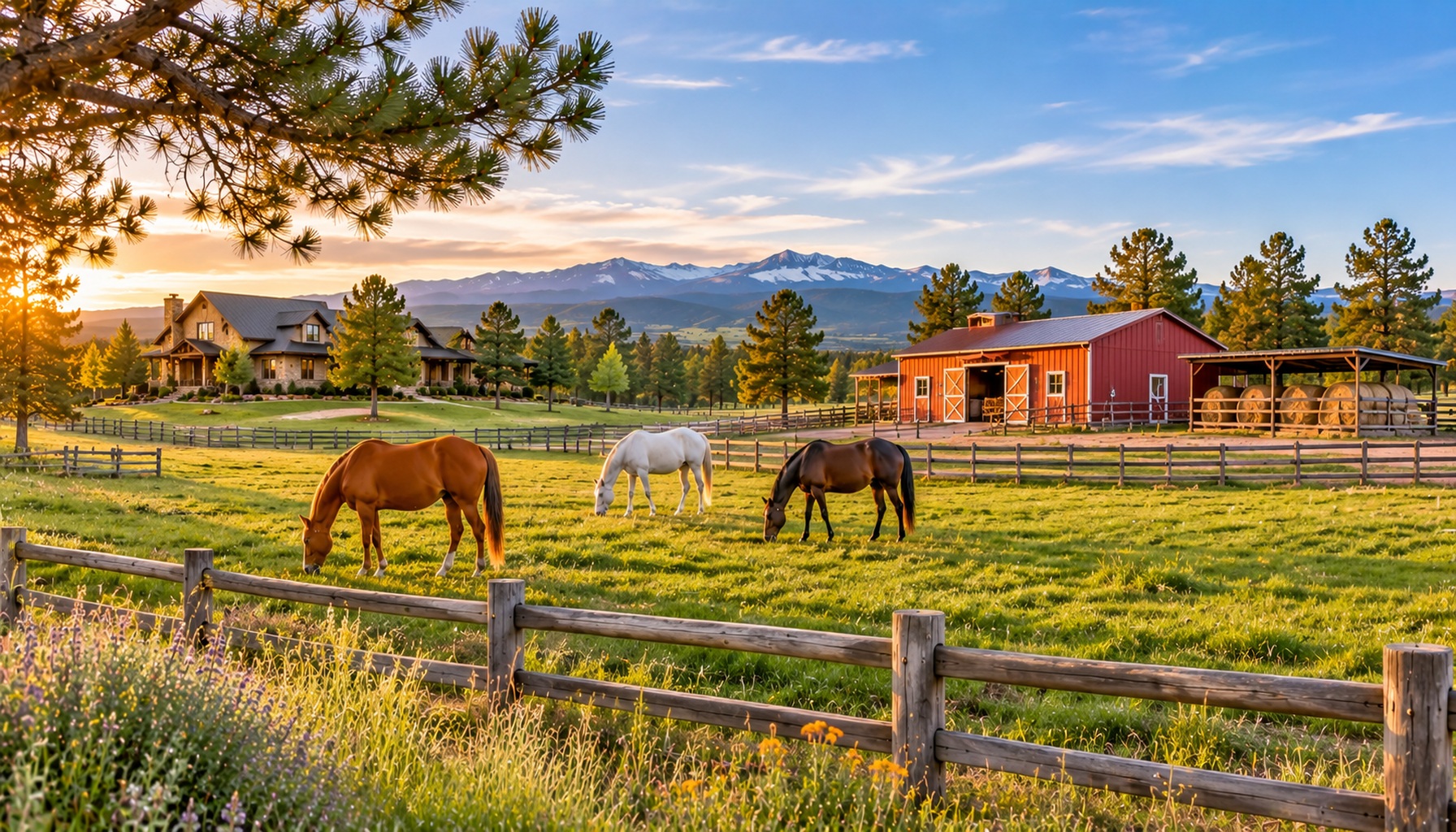
Buying Horse Property in Elbert County: 10 Essential Checks
What should you check before buying horse property in Elbert County, Colorado?
Before closing on horse property in Elbert County, you need to verify zoning, water rights, well capacity, fencing condition, soil quality, outbuildings, septic capacity, road access, HOA restrictions, and pasture carrying capacity.
Why Elbert County Horse Property Demands Extra Due Diligence Right Now
If you are actively searching for horse property in Elbert County, you already know the inventory picture is tight. According to market data reported by RealtyTrac, homes for sale in the Elbert 80106 zip code increased from 91 in September 2025 to 118 in September 2026, a 29.67% increase, but homes sold held nearly flat at 36 closings. The months of supply sits at roughly 3.7 as of fall 2026, per the same source. That is technically balanced, but acreage properties with equestrian infrastructure are a fraction of total listings.
What does that mean for you? It means that when a horse-ready property hits the market in Elizabeth, Kiowa, or Franktown, you need to move with confidence rather than scramble through inspections after the fact. These 10 checks are designed to help you walk a property with clear eyes, ask the right questions, and avoid the kind of costly surprises that send buyers back to square one.
I have been working Colorado real estate since 2002, and with 138 closed transactions and 23 years in the business, I can tell you that the due diligence on a horse property is fundamentally different from a standard residential purchase. Let me walk you through what matters most.
Check 1: Zoning and Land Use in Elbert County
Your first move, before you ever set foot on the property, is confirming the zoning designation through the Elbert County Planning and Zoning Department. Most of Elbert County is unincorporated, which generally provides more flexibility for horse keeping than incorporated municipalities. However, “unincorporated” does not mean “no rules.”
You need to verify:
- County zoning designation (Agricultural, Residential, or other)
- Number of animals permitted per acre under that designation
- Setback requirements for barns, arenas, and outbuildings
- Whether the parcel falls within a special district or HOA that layers additional restrictions on top of county zoning
This last point trips up buyers more than almost anything else. Established acreage communities like Spring Valley Ranch or Wildpointe in Elbert County offer mature ponderosa pines and privacy that builders cannot replicate, but their covenants may specify exactly how many horses you can keep, where your manure pile goes, and what your fencing has to look like. You want that covenant document in your hands before you write an offer, not during the inspection period.
Check 2: Water Rights and Well Permits in Eastern Colorado
Eastern Colorado water law is complex, and getting this wrong on a horse property can be a deal-breaker you do not discover until your well runs low in August. Horses require approximately 10 to 12 gallons per day for drinking alone, and if you are irrigating even a small pasture, the demand climbs fast.
You should confirm:
- The existing well permit and its designated uses (domestic, livestock, irrigation) through the Colorado Division of Water Resources
- Well production capacity measured in gallons per minute
- Whether the property has augmentation water or sits in a designated basin
- Historical well performance, especially during drought years
What I tell my clients is that a well producing two gallons per minute might be fine for a household, but once you add four horses and a small irrigated paddock, you are pushing limits. Always request a current well flow test as part of your inspection contingency, and do not rely solely on the seller’s stated capacity.
Check 3: Septic System Capacity for Elbert County Horse Properties
Your septic system was designed for a specific load. Adding a barn with a wash rack, expanding a household for multi-generational living, or running a small training operation can exceed that design. In Elbert County, where municipal sewer does not exist in most areas, an undersized or failing septic system can cost tens of thousands of dollars to replace.
Have the system inspected independently, and verify:
- Tank size and last pump date
- Leach field condition and remaining capacity
- Whether the system was permitted for the current use
- Soil percolation rates, which affect both septic performance and drainage around your barn areas
Check 4: Soil Quality, Drainage, and Pasture Carrying Capacity
Elbert County sits on the Colorado high plains with predominantly clay and sandy loam soils, per USDA Natural Resources Conservation Service data. That soil composition directly affects how many horses your land can sustain.
In this semi-arid climate, you should plan for roughly 2 to 5 acres per horse for adequate pasture, depending on soil quality, elevation, and whether you supplement with hay year-round. Standing water from poor drainage creates hoof health problems and mud management nightmares.
What you want to look for during a walkthrough:
- Low spots where water pools after rain or snowmelt
- Noxious weed presence, which signals poor pasture management
- Bare or overgrazed areas, which suggest the previous owner exceeded the land’s carrying capacity
- General soil health, which you can verify through a USDA NRCS Web Soil Survey for the specific parcel
Check 5: Fencing Assessment on Elbert County Acreage
Fencing is one of the most expensive infrastructure items on any horse property, and the wrong type can be dangerous. Barbed wire, common on cattle operations throughout Elbert County, is generally unsuitable for horses because of the laceration risk.
Walk every fence line and evaluate:
- Type of fencing: pipe and rail, no-climb wire, electric, or a combination
- Condition and age: sagging wire, rotted posts, and leaning corners all signal replacement costs
- Linear footage: multiply the perimeter plus any cross-fencing to estimate replacement budgets
- Cross-fencing for rotational grazing, which is essential for pasture health in this climate
Replacing perimeter fencing on a 10-acre parcel is a significant expense. Knowing the condition before you negotiate gives you real leverage.
Check 6: Barn, Arena, and Outbuilding Condition
You are not just buying a house; you are buying a working facility. Evaluate every structure on the property:
- Barn construction quality: is it a prefab pole barn, a concrete-block structure, or a wood-frame barn?
- Stall count, ventilation, and drainage
- Hay storage: is there a separate, covered structure, or is hay stored in the barn (a fire risk)?
- Arena footing and drainage, if an arena exists
- Run-in sheds: are they positioned for wind protection?
With 118 five-star reviews from past clients, I have learned that the outbuilding conversation is where my equestrian buyers make or break their decision. A gorgeous house with a deteriorating barn is not a horse property; it is a house on acreage with a project.
Check 7: Road Access and Year-Round Drivability
Many horse properties in Elbert County sit on county roads or private roads that are gravel or dirt. You need to know:
- Is the road county-maintained or private? Private roads mean you share maintenance costs with neighbors.
- How does the road perform in winter? Some sections of County Road 134, County Road 142, and similar routes can become impassable after heavy snow without private plowing.
- Can a horse trailer navigate the driveway? Tight turns, steep grades, and narrow culverts can make trailering difficult or impossible.
Check 8: HOA Restrictions on Livestock in Elbert County
Not every Elbert County subdivision welcomes horses. Newer communities built on smaller lots often restrict livestock entirely. Even in communities that allow horses, there may be limitations on the number of head, manure management requirements, or fencing specifications.
What I always recommend: request the full covenant document and read it yourself. Do not rely on a verbal assurance from anyone that “horses are fine.”
Check 9: Proximity to Equine Services Near Elizabeth and Kiowa
Living on a horse property means regular vet visits, farrier access, and feed runs. Elizabeth has resources like Elizabeth Feed and Supply on Tabor Street, and the Elbert County Fairgrounds south of town provide arena access, rodeo facilities, and community events. But if you are looking at a more remote parcel near Kiowa or out along Highway 86, your drive to the nearest equine vet or feed store gets longer.
Factor in:
- Distance to the nearest large-animal veterinarian
- Hay and feed delivery availability to your specific location
- Access to riding trails and open space
Check 10: Financing a Horse Property Purchase in Elbert County
Horse properties do not always finance like standard residential purchases. You should understand:
- Conventional loans typically work for properties under 10 acres with a primary residence
- USDA loans may be available in parts of Elbert County due to rural designation
- Properties over 35 acres or with significant agricultural use may require agricultural or farm loans
- Well and septic inspections add to closing costs and extend due diligence timelines
Per research data, the median home price in Elbert County is $700,000. With a 20% down payment of $140,000 and a 30-year fixed rate at 7.0%, the estimated principal and interest payment is roughly $3,725 per month before taxes, insurance, and other costs. Based on the 28/36 guideline, you would want a household income of roughly $124,189 to $159,672 per year. That math gets more complex when lenders need to evaluate outbuildings, acreage, and water rights on top of the residence.
Frequently Asked Questions About Buying Horse Property in Elbert County
How many horses can I keep per acre in Elbert County?
It depends on your specific zoning designation and whether your parcel falls under HOA covenants. Most unincorporated agricultural parcels in Elbert County allow livestock, but the carrying capacity of the land itself typically supports one horse per 2 to 5 acres in this semi-arid climate. Always verify permitted head count through the Elbert County Planning and Zoning Department before closing.
Do I need a special well permit for livestock water in Colorado?
Yes. Your existing well permit specifies designated uses, which may or may not include livestock watering. You can verify your well’s permitted uses through the Colorado Division of Water Resources. If livestock is not listed, you may need to apply for a permit modification, which adds time and cost to your purchase.
What is the average price for horse property in Elizabeth, Colorado?
As of October 2026, the median sold price in Elizabeth (ZIP 80107) is $644,000 across all property types, per local MLS data. However, horse-ready properties with acreage, barns, and fencing typically list above the median, with active listings for acreage properties ranging from approximately $600,000 for smaller parcels to well over $1 million for larger ranch properties.
Can I get a USDA loan for horse property in Elbert County?
Parts of Elbert County carry rural designations that may qualify for USDA financing. However, USDA loans have income limits and property eligibility requirements that vary by location. Your lender will need to verify the specific parcel’s eligibility before you commit to this financing path.
How long do horse properties typically take to sell in Elbert County?
Per RealtyTrac data, homes in Elbert County typically spend about 96 days on the market on average. Horse properties with specialized infrastructure can sit longer because the buyer pool is smaller and the due diligence period is more complex.
What should I look for in an Elbert County well inspection?
Request a current flow test measuring gallons per minute, verify the well depth and casing condition, and confirm the permitted uses match your intended operation. A well producing under two gallons per minute may not support both a household and multiple horses without supplemental water storage.
Is barbed wire fencing acceptable for horses in Elbert County?
Barbed wire is common on cattle operations throughout Elbert County, but it is generally considered unsuitable for horses due to serious laceration risk. Budget for replacing barbed wire with pipe and rail, no-climb wire, or appropriate electric fencing if the property you are considering uses it.
What financing challenges are unique to horse property purchases?
Properties over 35 acres or with significant agricultural components may not qualify for conventional residential loans. Lenders may require agricultural or farm loan products, which have different qualification criteria, interest rates, and down payment requirements. Well and septic inspections also add to closing costs and can extend timelines.
How does Elbert County’s inventory of horse properties look in 2026?
Acreage inventory is tight. While total listings in the 80106 zip code rose 29.67% from September 2025 to September 2026 (91 to 118 listings, per RealtyTrac), horse-ready properties with existing equestrian infrastructure represent a small fraction of that number. Homeowners who locked in low mortgage rates during 2020 and 2021 are staying put, keeping supply especially constrained for the acreage buyer.
Should I hire a specialized inspector for a horse property in Elbert County?
Absolutely. A standard home inspection covers the residence but typically does not evaluate well capacity for livestock, septic load for equestrian use, fencing integrity, or outbuilding structural soundness. You want a home inspector for the house plus specialized evaluations for the well, septic, and any equestrian structures.
The Bottom Line on Buying Horse Property in Elbert County
Buying horse property in Elbert County is not like buying a subdivision home in Parker or Castle Rock. The due diligence is deeper, the financing can be more complex, and the details that matter most, like well capacity, water rights, and septic load, are things most residential agents never encounter.
I live on acreage in Elizabeth with my own horses, and I have spent 23 years working this exact market. If you are serious about finding the right horse property in Elbert County, I would love to help you navigate these 10 checks and make a confident decision. Reach out to me, Marjorie Engle with Engle Homes Group at eXp Realty, at 303-881-2707 to start the conversation.