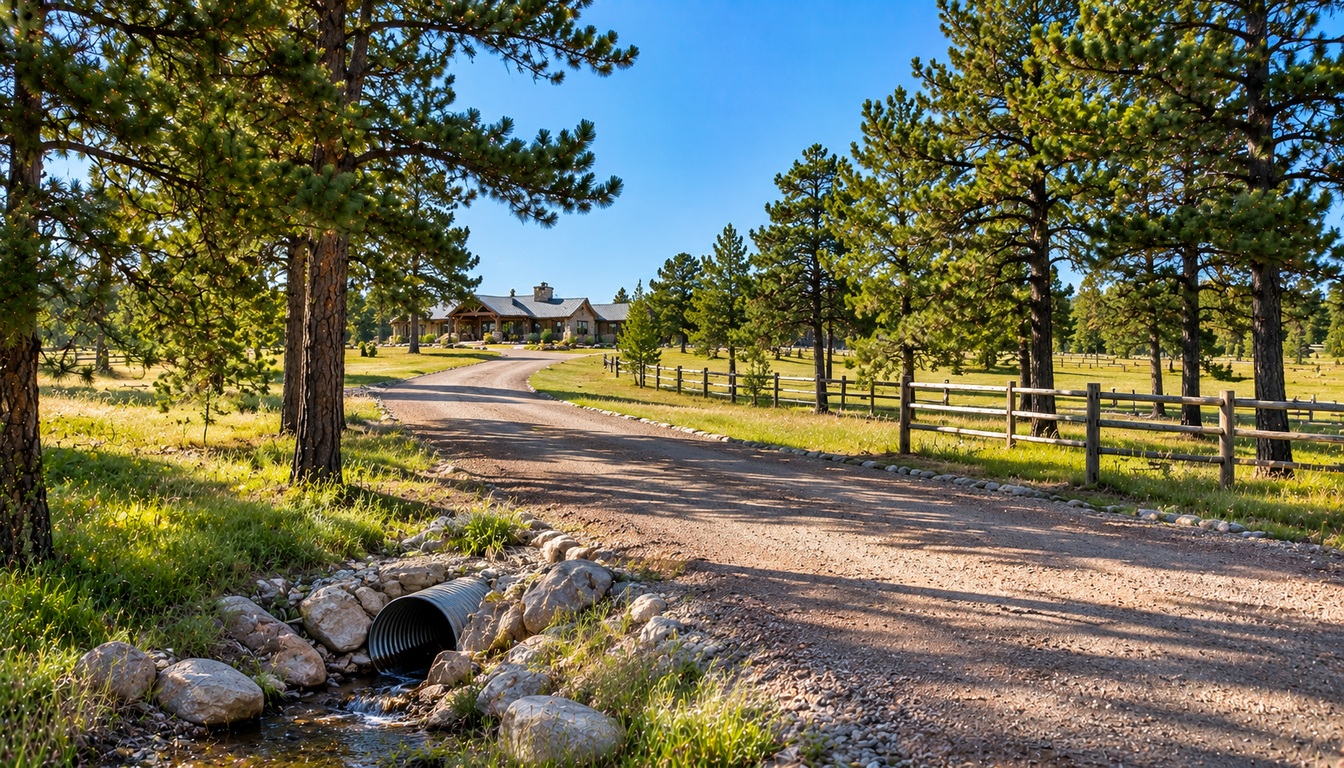
Building a Home on Rural Land in Douglas County: Costs Beyond Construction
What hidden costs should you expect when building a custom home on rural acreage in Douglas County and Elbert County, Colorado?
When you build on rural land in Douglas County or Elbert County, the costs beyond construction, including wells, septic, road access, water rights, and utility extensions, can add 20% to 40% or more to your total project budget.
Why This Matters Right Now in Douglas County and Elbert County
You’ve found the perfect 10-acre parcel south of Franktown. The views of the Pikes Peak corridor steal your breath. The price per acre feels reasonable. So you start sketching floor plans and getting excited about your custom build.
Here is what I need you to understand before you go any further: the cost of building the house itself is only part of the equation, and in many cases, it is not even the biggest financial surprise.
I have worked in Colorado real estate since 2002, and with 23 years in this market and over 138 transactions closed across Elbert County, Douglas County, and the surrounding communities, the single most common mistake I see buyers make is budgeting only for construction. In rural areas like Elizabeth, Kiowa, and unincorporated Douglas County, the land preparation and infrastructure costs can reshape your entire financial picture. Let me walk you through exactly what to expect.
Wells, Water Rights, and the Aquifer Question in Elbert County
If you are building on acreage east of I-25 in communities like Elizabeth or Kiowa, you are almost certainly going to need a well. Municipal water does not extend to most rural parcels in Elbert County.
What does that actually mean for your wallet? A residential well in this corridor typically requires drilling into one of the area’s deep aquifers: the Dawson, Denver, or Arapahoe formations. Navigating the complexities of these aquifers is essential to securing the water rights needed for a sustainable property.
Here is what you need to budget for:
- Well drilling costs vary significantly based on depth, and in Elbert County, wells commonly need to reach several hundred feet
- Well permitting through the Colorado Division of Water Resources, which requires its own timeline and fees
- Water rights acquisition, which can be a separate, substantial cost depending on the parcel’s legal water allocation
- Pump, pressure tank, and water treatment systems to make the well functional for daily household use
What I tell my clients is this: water is the single most important due diligence item on any rural parcel. A parcel with strong, permitted water rights in Elizabeth is fundamentally more valuable than one without them, even if the asking price per acre looks identical. Elbert County uses Agricultural (A) and Agricultural Residential (AR) zoning designations to manage growth, and most “A” zoned parcels require a minimum of 35 acres to maintain their status, per Elbert County zoning regulations. That zoning classification directly impacts your water rights options.
Septic Systems and Wastewater Solutions for Rural Builds
No municipal sewer means you need an on-site wastewater system. This is non-negotiable for every rural build in the Elizabeth, Kiowa, and Franktown corridor.
Your septic costs depend heavily on soil conditions. Elbert County’s soils vary dramatically even within a single parcel. Before you can install a system, you will need:
- Percolation testing (“perc test”) to determine how your soil absorbs water
- Engineered septic system design, which must be reviewed and approved by the county
- Installation of the system itself, which can range from a conventional gravity system to an engineered alternative system if soil conditions are challenging
- Ongoing maintenance costs, including periodic pumping and inspections
The type of system the county requires is determined by the perc test results, not by your preference. If your soil drains slowly, you may need an advanced treatment system that costs significantly more than a conventional setup.
So why does this matter for your budget? Because the difference between a standard system and an engineered alternative can be substantial, and you will not know which one you need until after you have already purchased the land (unless you negotiate a perc test contingency into your purchase contract, which I strongly recommend).
Road Access, Driveways, and Emergency Access in Douglas County
Here is something that surprises almost every first-time rural buyer: getting from the county road to your building site is your responsibility, and it is not cheap.
Your title search must confirm permanent, deeded access for both you and emergency services. Without it, you might find yourself in a costly legal dispute with neighbors or unable to secure a mortgage. This is not theoretical; access disputes are among the most common issues I navigate with buyers looking at acreage along corridors like County Road 13 south of Elizabeth or County Road 21 south of Kiowa.
Budget for these road and access costs:
- Driveway construction, which on a 10-acre or larger parcel can mean building a quarter-mile or more of graded, compacted road surface
- Culvert installation if your driveway crosses drainage areas
- County road access permits
- Fire department turnaround requirements, which often mandate a specific turning radius at the end of your driveway for emergency vehicles
- Grading and drainage engineering to prevent erosion, especially critical on the rolling terrain between Elizabeth and Franktown
What does this look like in practice? A driveway on flat, well-drained ground with a short run to the county road is manageable. A driveway that climbs a hillside, crosses a drainage swale, and extends several thousand feet will cost exponentially more and requires ongoing annual maintenance.
Utility Extensions, Power, and Connectivity on Rural Acreage
When you build in a master-planned community in Highlands Ranch or Castle Rock, utilities are stubbed to your lot line. When you build on rural acreage in Elbert County or unincorporated Douglas County, you are often paying to extend those utilities to your building site.
Here is what typically needs to be brought in:
- Electrical service extension from the nearest transformer, which may be a significant distance from your building envelope
- Natural gas (if available at all; many rural parcels rely on propane instead, which means installing a tank and budgeting for ongoing fuel deliveries)
- Internet and communications, though the landscape has improved dramatically with high-speed satellite internet and expanding fiber networks, meaning you can manage a global business from your back porch in Elizabeth
- Solar and backup power considerations, especially on parcels far from the grid
Each of these involves separate permits, separate contractors, and separate timelines. Electrical extension alone can represent a meaningful cost if the nearest power infrastructure is more than a few hundred feet away.
Permits, Impact Fees, and the Regulatory Timeline in Elbert County
You might be surprised to learn that rural does not mean unregulated. Elbert County and Douglas County both have permitting processes for new residential construction, and those processes carry costs beyond the building permit itself.
Plan to encounter:
- Building permit fees based on the scope and value of your project
- Impact fees that fund county infrastructure like roads and schools
- Grading and erosion control permits, which are especially important given the region’s semi-arid climate and fire risk
- Well and septic permits (separate from building permits)
- Inspections at multiple phases of construction
What catches most buyers off guard is the timeline. Permitting for a rural custom build in Elbert County can take months, not weeks. Each inspection phase must pass before the next construction phase begins, and scheduling inspectors in rural areas can add delays you would not encounter in a suburban build.
With 118 five-star reviews from past clients, I have guided buyers through this permitting process many times. As one client shared, “She was not only attentive and knowledgeable, but also genuinely caring in a way that made us feel supported as people, not just clients. She was always there when we had questions, no matter how small, and if she didn’t have an answer right away, she took the time to find it and follow through.”
Insurance, Fire Mitigation, and Ongoing Costs for Rural Properties
Surging insurance premiums are driving the total cost of housing even higher across Colorado, and rural properties face unique cost factors:
- Wildfire mitigation may be required or strongly recommended, including defensible space clearing around your building envelope
- Homeowner’s insurance for rural properties without a nearby fire hydrant can be considerably higher than comparable coverage in a municipal service area
- Well and septic maintenance are ongoing annual costs that suburban homeowners never face
- Road maintenance on private driveways and shared access roads is your year-round responsibility
Frequently Asked Questions
How much should I budget beyond construction costs for a rural build near Elizabeth?
You should plan for infrastructure costs including wells, septic, road access, utility extensions, permits, and insurance to add a significant percentage to your total project budget. The exact amount depends on your parcel’s specific conditions, including distance from utilities, soil type, and well depth requirements. Getting thorough due diligence before purchasing land is essential. According to the Consumer Finance Protection Bureau’s guidance on homebuying costs, understanding all expenses upfront is critical to your financial planning.
Do I need water rights to build on rural land in Elbert County?
Yes. Navigating the complexities of the Dawson, Denver, and Arapahoe aquifers is essential to securing the water rights needed for a sustainable property in Elbert County. Your well permit application through the Colorado Division of Water Resources will define what water you can legally access.
What zoning applies to rural parcels in Elbert County?
Elbert County uses Agricultural (A) and Agricultural Residential (AR) zoning designations. Most “A” zoned parcels require a minimum of 35 acres to maintain their status. This directly affects what you can build and how you can use the land. According to census data for Elbert County, the county’s population remains sparse, with significant portions reserved for agricultural and rural residential use.
Can I get a conventional mortgage for a custom build on rural land?
As a designated high-cost area, Elbert County has 2026 conforming loan limits of $862,500 for a single-family home, according to loan data from LoanGraphs. This is higher than the national baseline of $832,750, allowing more buyers to use conventional financing rather than jumbo loans.
What kind of internet access is available on rural acreage near Elizabeth or Kiowa?
Modern rural properties in 2026 rarely sacrifice connectivity. High-speed satellite internet and expanding fiber networks mean you can manage a global business from your back porch, per market research. However, you should verify specific coverage for your parcel before purchase.
How long does the permitting process take for a rural custom build in Douglas County?
Rural builds involve multiple separate permits for the structure, well, septic, grading, and access. Each phase requires inspections before construction continues. The cumulative timeline can stretch months beyond what suburban builders typically experience.
What financing options exist for agricultural land with a home?
Specialized lenders often require a 20% to 35% down payment for large-scale agricultural operations, per financing research data. These loans focus on the land’s production value rather than just the primary residence. Your loan structure will depend on whether the property is classified as residential or agricultural.
Is propane or natural gas more common on rural parcels near Franktown?
Many rural parcels in unincorporated Douglas County and Elbert County do not have natural gas service. Propane is the standard alternative, requiring a tank installation and ongoing fuel deliveries as a recurring cost you should factor into your budget.
What fire mitigation requirements apply to new builds in this area?
Rural properties face wildfire mitigation standards including defensible space requirements around your building envelope. Your insurance carrier may also require specific mitigation measures. These costs are not optional and should be included in your pre-construction budget.
How do I verify road access and easements before buying rural land?
Your title search must confirm permanent, deeded access for both you and emergency services. Without it, you might find yourself in a costly legal dispute with neighbors or unable to secure a mortgage. Always review access documentation with your agent and a real estate attorney.
The Bottom Line
Building on rural land in Douglas County or Elbert County is one of the most rewarding decisions you can make, but only if you go in with your eyes wide open about the full cost picture. Wells, septic, road access, utility extensions, permits, insurance, and fire mitigation all add layers of expense that suburban buyers have never had to think about.
I have been working this corridor since 2002, living on acreage in Elizabeth and helping buyers navigate wells, septic, water rights, and custom builds across Elbert County and Douglas County. This is what I do every day. If you are considering a rural build or looking at land, I would love to walk you through the due diligence process before you commit. Reach out to me, Marjorie Engle with Engle Homes Group at eXp Realty, at 303-881-2707. Let’s make sure your dream property does not come with surprises.